How to Build a Jewelry Wardrobe From Three Pieces
Share
How to Build a Jewelry Wardrobe From Three Pieces
There is a version of getting dressed that takes four minutes and ends with her looking exactly like herself, and another version that takes twenty and ends with three rejected necklaces on the bed and the feeling that nothing works. The difference between those two mornings is usually not the jewelry. It is the absence of a system, a small set of pieces that function together so reliably that choosing stops being a choice.
This post is about that system. Specifically, the argument that three pieces, chosen with some care and a little self-knowledge, can cover nearly every situation a wardrobe asks of you. Not three pieces forever, not a minimalist manifesto, just a starting point that makes everything else make sense.
Why Three
Three is not a magic number, but it is a useful one. One piece is a signature, which is a commitment some people are ready for and others are not. Two pieces invite layering but leave gaps. Three pieces create a wardrobe in the genuine sense: a set of things that relate to each other, that work independently and together, that answer most of what a day might ask.
More than three is fine, obviously. The goal is not limitation but foundation. Whatever you add after three has something to build on, which is the difference between a collection and an accumulation.
The three categories that cover the most ground are a chain, a ring, and an earring. Not specific pieces yet, just categories, because the logic matters before the object does.
The Chain
A fine chain at the right length is the piece that does the most work for the least effort, sitting against the collarbone or falling below it depending on the neckline, present without requiring attention, layerable when the occasion asks for more than one thing.
The length question matters more than most people expect. A chain that sits at the base of the throat reads differently from one that falls to the sternum, and differently again from one that lands at the chest. The right length is not universal but personal, determined by the neckline you reach for most often and the place on your body where a chain simply looks like it belongs. The all-necklaces collection covers the full range of lengths, and it is worth trying a few before committing to one.
For a foundation piece, a plain fine chain in sterling silver or a simple curb chain tends to outlast more decorative options. It layers without competing, works under a crew neck and over a plunging one, and ages honestly. The 925 sterling silver collection has several that work this way, pieces that become invisible in the best possible sense after the first few weeks of wear.
The Ring
A ring is the piece most people already own, and the piece most people get wrong, not in terms of aesthetics but in terms of fit. A ring that is slightly too large spends its life rotating. A ring that is slightly too small becomes something you think about on warm days. The right ring stops being something you think about at all, which is the whole point.
For a wardrobe foundation, a band works better than a setting with a stone, not because settings are less beautiful but because they introduce fragility and snagging and a precious quality that changes how casually you wear them. A hammered band or a simple plain band can be worn into the sea, through a workout, against every surface the day presents, and come out looking exactly as it should, maybe a little warmer, a little more itself. The rings collection has several options that operate exactly this way.
The question of which finger is worth spending some time on. Index finger rings read differently from middle finger rings, which read differently from pinkies. The choice changes the visual logic of the hand, and the right answer is whatever you stop noticing after a day of wearing it.
The Earring
The earring is the piece closest to the face and therefore the one that does the most work in terms of how someone reads you in the first seconds of seeing you. It is also the piece with the most variables: size, shape, weight, movement, whether it is a stud or a hoop or something that catches light and swings.
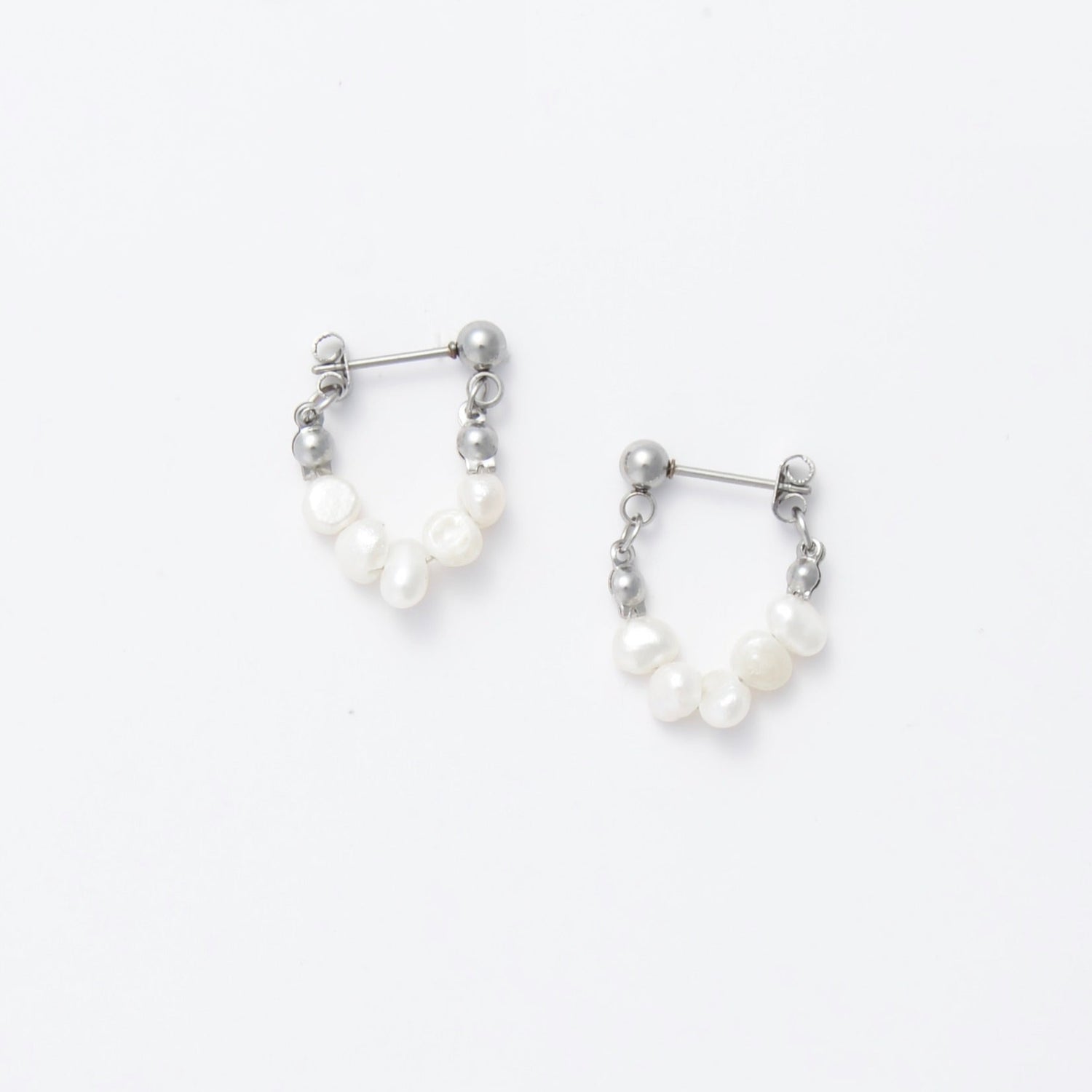
For a foundation piece, the goal is something that works every day without requiring a decision about appropriateness. Small hoops cover more ground than almost anything else. They read as finished without looking formal, they work with hair up or down, they move just enough to be interesting without demanding attention. The all-earrings collection has several variations on this format, and it is worth noting that the difference between a huggie that fits the ear and one that sits slightly away from it is significant in terms of how it reads and how comfortable it is over a long day.
For some people the foundational earring is a stud rather than a hoop. The logic is the same: what is the piece you could put in at 7am and not think about again until you take it out. That piece, whatever its specific form, is the one worth building on.
How the Three Work Together
The value of three pieces chosen with some relationship to each other is that they create a visual logic. A fine chain, a simple band, and small hoops are all operating in the same register: present, quiet, considered. They layer without competing. They work individually without looking incomplete.
The stacking rings post covers what happens when you start to build on a ring foundation. The layering necklaces guide covers the same logic for chains. Both of those conversations assume you have a foundation to build from, which is exactly what three well-chosen pieces provide.
What changes once you have the three is that adding a fourth piece becomes easier rather than harder. You know what register you are working in. You know what the new piece has to relate to. The question shifts from where do I even start to what would make this more interesting, which is a much more pleasant question to have.
On Buying the Three
One mistake worth avoiding is trying to acquire all three at once. Buying a set of pieces that are designed to work together produces a coordinated look rather than a personal one, and coordination is not the same thing as style. The pieces that become a genuine wardrobe foundation usually arrive at different moments, chosen for different reasons, and happen to work together because they were all chosen by the same person with consistent taste.
The more useful approach is to identify which of the three categories is most missing from your current collection and start there. If you have rings and earrings but no chain that feels right, that is the piece to find. If you have a chain you love but earrings that never quite work, that is the gap. The jewelry care guide is worth reading once you have the pieces, because how you care for them in the first weeks often determines how they age over the years.
Three pieces, chosen with some attention, cared for honestly, worn until they stop requiring thought. That is the wardrobe. Everything else is addition.