Why Jewelry-Making Became a Hobby
Share
Pottery classes are full. Knitting circles meet every Wednesday at the back of the coffee shop on Amsterdam. The community garden plot on the corner of 79th has a waiting list. Bread starters are exchanged at brunch the way phone numbers used to be. There is a kit on the kitchen counter, with small pliers and a pile of silver wire and a card of jump rings, and the wearer who has bought the kit has been at it for about three weeks now. She is not very good yet. She is also not interested in being very good, which is the part that has surprised her about herself.
This is the cultural shift of the last few years that the brand has been watching with quiet interest: women in their late twenties and thirties have become a generation of hobby-acquirers. The hobbies are specific. Pottery, gardening, bread-making, knitting, embroidery, painting, candle-making, and increasingly jewelry-making. They are tactile. They are slow. They produce a small physical object at the end. They do not happen on a screen. The hobbies are connected by something the wearer has been trying to name for herself for a year now, and the closest she has gotten is that all of them are the small daily practice of making something with her own hands in a decade that has otherwise asked her to produce mostly with her mind.
The Wider Pattern
The hobby acquisition trend is not invented by any particular generation, but it has taken a specific shape in the wearer's. The women picking up pottery now are not the ones who grew up making pottery; they are the ones who grew up sending emails. The women learning to knit are not the ones whose grandmothers taught them; they are the ones who watched a YouTube video about knitting at the end of a long Tuesday and ordered the needles before bed. The hobbies are coming back to a generation that did not have them, which is part of why they have landed with the kind of intensity they have.
The other part is that the work is generative in a way most of the wearer's other daily labor is not. The email she sent at three was, by five, replaced by another email; the spreadsheet she updated in the morning had been overwritten by the afternoon. The pottery cup she made on Sunday is still on her kitchen shelf. The loaf of bread she baked is in the freezer. The chain she made from silver wire is around her wrist. The hobby produces an object. The object stays. The wearer has, at the end of an hour at the kitchen counter, something to hold that did not exist before she started.
This is, in a quiet way, an argument against the rest of the decade. Most of what the wearer makes in her professional life is, by design, ephemeral. The pottery and the bread and the bracelet are her small protest against the dematerialization of her own work. She is not trying to become a potter; she is trying to remember that she has hands.
Why Jewelry-Making, Specifically
Of all the hobbies in the slate, jewelry-making has landed with a particular kind of intensity, and the brand has thoughts about why. The first is scale. A pottery hobby requires a wheel, a kiln, or at minimum a class with both. A bread hobby requires a kitchen and several hours. A garden hobby requires a plot of dirt or at least a windowsill with light. Jewelry-making requires a small table, a pair of pliers, a length of wire, and an hour. The barrier to starting is the lowest of any of the major tactile hobbies, and the wearer who has been considering picking something up for months can start jewelry-making on a Tuesday evening after work without rearranging anything else in her life.
The second is the relationship between the maker and the worn object. A wearer who makes a piece of pottery places it on a shelf. A wearer who bakes a loaf of bread eats it. A wearer who knits a scarf wears it in winter. A wearer who makes a piece of jewelry, by contrast, wears it on her body, often daily, often immediately. The making and the wearing are not separated by time or by distance. The piece she finished at nine on a Tuesday evening is on her wrist by Wednesday morning, and the small private knowledge of having made it travels with her into her week.
The third reason is the most interesting, and the brand has been working it out slowly. Jewelry-making is the hobby that operates closest to the wearer's existing relationship to jewelry. She has been wearing pieces for most of her life. She has been choosing pieces every morning at the dresser. She has been accumulating a small archive in the dish on the dresser for years. The hobby of making jewelry is the small extension of a practice she has already been running. It is not a new vocabulary; it is a deeper engagement with one she already speaks.
What Making Teaches About Wearing
The wearer who has spent six weeks at the kitchen counter with the pliers and the wire has learned things about jewelry that no amount of wearing it had taught her. She has learned that a chain is, on closer inspection, an extraordinary feat of small repetition. She has learned that a jump ring is harder to close cleanly than she had assumed. She has learned that the difference between an amateur piece and a brand piece is not the materials, which she can buy at any craft store, but the precision of the joinery and the consistency of the form across hundreds of identical small steps.
This is, the brand suspects, part of why women who make jewelry often become more devoted to buying it. The wearer who has spent two hours making a single small chain has, by the end, a respect for the chain at her collarbone that she did not have before. The chain at her collarbone was made by someone with the precision and patience that she now knows she does not have. The making teaches her what the making costs, and what the made object actually is, and the brand piece she has been wearing since March acquires a depth of regard she had not previously brought to it.
The pieces in the 925 Sterling Silver Collection look different to the wearer who has tried, even once, to make a chain at her kitchen counter. She sees the joinery now. She sees the consistency of the links. She sees the work the maker did that she could not have done herself, which is to say, she sees the brand piece as a piece of craft rather than as a piece of commerce.
The Small Pieces She Makes Herself
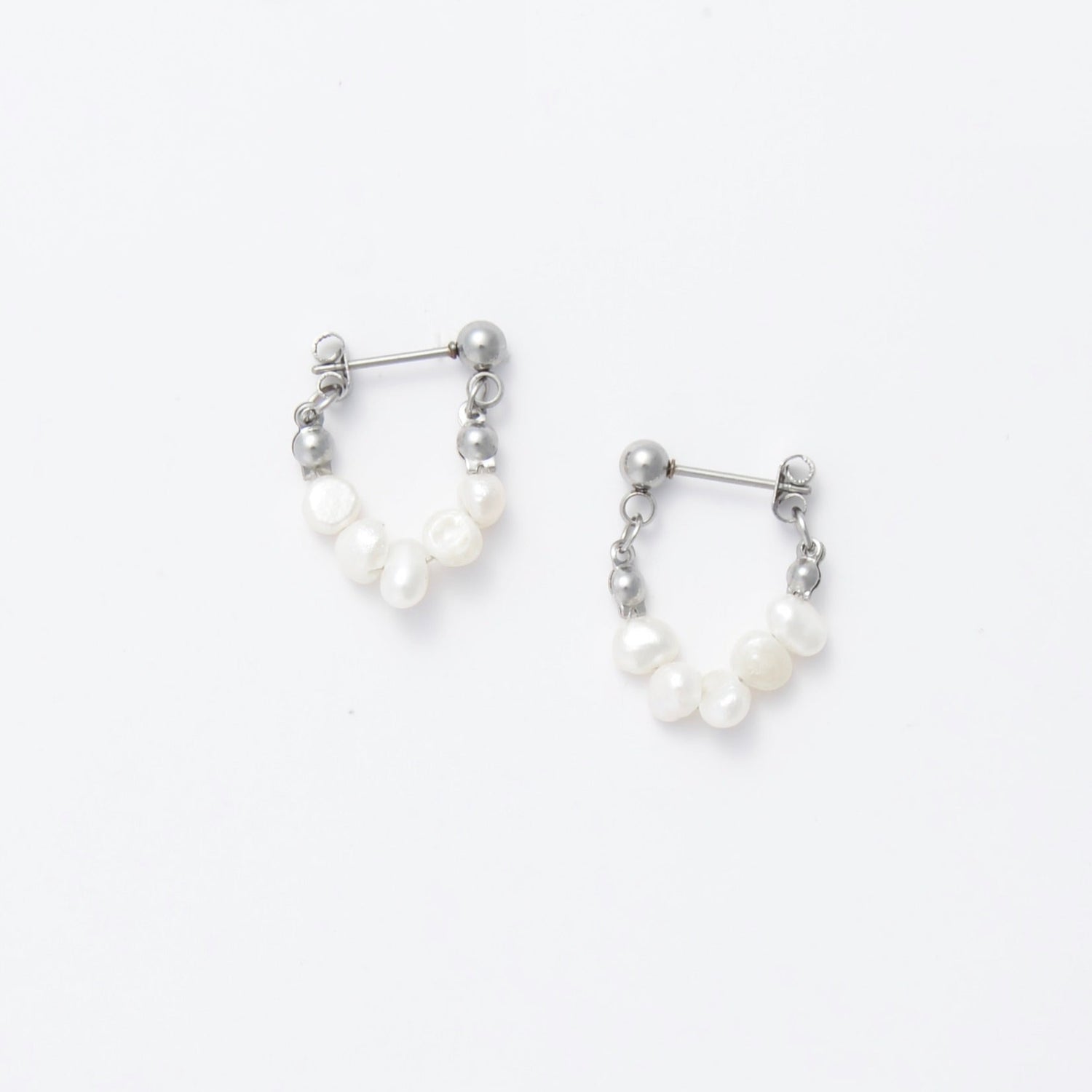
The pieces the wearer makes at her kitchen counter are not, generally, the pieces she wears in public. They are small, often imperfect, often sentimental in ways that are private to her. A bracelet woven from silver wire with a single freshwater pearl at the center, made on a Sunday afternoon. A pair of small drop earrings with stones she picked up on a beach last summer. A small charm she beat flat from a length of sterling silver to mark something she does not have to explain.
These pieces live in the dish on the dresser alongside the brand pieces, and they get reached for at different times. The brand pieces are the daily uniform; the wearer-made pieces are the small private register, the ones she puts on when she is alone in the apartment on a Saturday morning, the ones she does not have to explain to anyone.
The wearer-made pieces also tend to mark moments the brand pieces do not. The bracelet she made on the Sunday after the move is the bracelet that marks the move; the charm she made the week she finished residency is the charm that marks the end of residency. These are the pieces that hold the kind of private autobiography that even a lucky charm bought from a brand cannot quite hold, because the wearer made the piece in the same week the thing happened, and the piece and the moment are sewn together at the level of the making itself.
The Brand's Place in This
The brand belongs to the same tradition. The wearer who picks up jewelry-making as a hobby is, in nine cases out of ten, the wearer who comes back to buying brand pieces with a deeper sense of why the brand pieces work. The hobby and the brand are different registers of the same relationship to the piece on the collarbone, and the wearer who runs both is the wearer the brand has been writing for all along.
The brand was founded on the same instinct. The brand has always been, at its origin, the story of two sisters who started making jewelry by hand. The fact that wearers are picking up the same practice at their own kitchen counters is, if anything, the small confirmation that the brand's original instinct was correct: that the work of making jewelry with the hands is a work worth doing, and the work of wearing jewelry made with the hands is a work worth doing too.
The kit on the kitchen counter has been there for three weeks now. The wearer has made one chain that worked, two that did not, and a small charm that she has been wearing on her wrist for the last four days. She is not very good yet. She is also not in any particular hurry to be good. The pliers will still be on the counter on Tuesday evening, after work, when she sits down to try the second chain again, with the cat on the table beside her, watching as cats watch, neither approving nor disapproving, simply present for the slow work of the hands.