What Jewelry to Wear as the Bride
Share
The bride's jewelry sits at the center of the wedding day. It appears in every photograph, catches the light at the altar, moves with her down the aisle, and stays on her body from the morning of getting ready through the last dance of the night. The pieces she chooses will be visible in the images her children and grandchildren look at decades from now, and the compositions she builds become part of how the day itself is remembered. Choosing the jewelry is one of the most personal decisions a bride makes for her wedding day, and the process rewards attention.
This post is a guide to what jewelry works for the bride, how the pieces support the dress and the tradition, and how the bride builds the composition to honor both the day and herself. The good news is that the underlying principles are simple, the pieces the bride reaches for often come from the collection she has been building for years, and the composition tends to land beautifully when the bride trusts her own taste and lets the pieces do their quiet work.
What jewelry should the bride wear?
The bride typically wears a set of considered pieces that complement her dress and hair, including earrings, a necklace or pendant, a bracelet, and her wedding ring. Pearl and sterling silver are the classic material choices, and the register runs from small delicate pieces for intimate ceremonies to more considered statement pieces for formal weddings. The bride chooses based on her dress, her hair, the venue, and the register of the day she has planned.
The composition typically supports rather than competes with the dress. A gown with elaborate beading calls for quieter jewelry that lets the dress do the work. A simple sheath dress calls for more considered pieces that add the visual weight the dress does not carry on its own. A vintage-style dress often pairs beautifully with vintage-inspired jewelry, either passed down from family or chosen to echo the era.
The bride's own daily jewelry practice usually points toward the right composition for the day. A bride who has been wearing a chain at her collarbone for years often continues to wear the piece under her dress, sometimes visible and sometimes not. A bride who has always favored pearl pieces reaches for pearls for the day itself. A bride who wears silver as her daily material chooses silver for the wedding as well. The wedding jewelry belongs to the same wearer as the daily jewelry, and the composition holds together when the bride trusts this continuity.
What earrings should the bride wear?
The best earrings for the bride are pieces that complement her hair choice, her neckline, and the overall register of her look. Small pearl or diamond studs work beautifully for brides with hair up and simple necklines. Drop earrings work for brides with sculptural updos or off-the-shoulder dresses. Chandelier or statement earrings work for brides who want the earrings to be the anchor of the composition.
The hair choice is the first consideration. A bride with her hair up leaves her ears fully visible, and her earrings become one of the most photographed elements of the composition. A bride with her hair down partially conceals the earrings, which means the pieces need to be small and considered enough to peek through beautifully rather than compete with the hair. The pieces in the drop earrings collection work particularly well for brides with updos, and the small studs and hoops in the broader earrings collection work beautifully for brides with hair down.
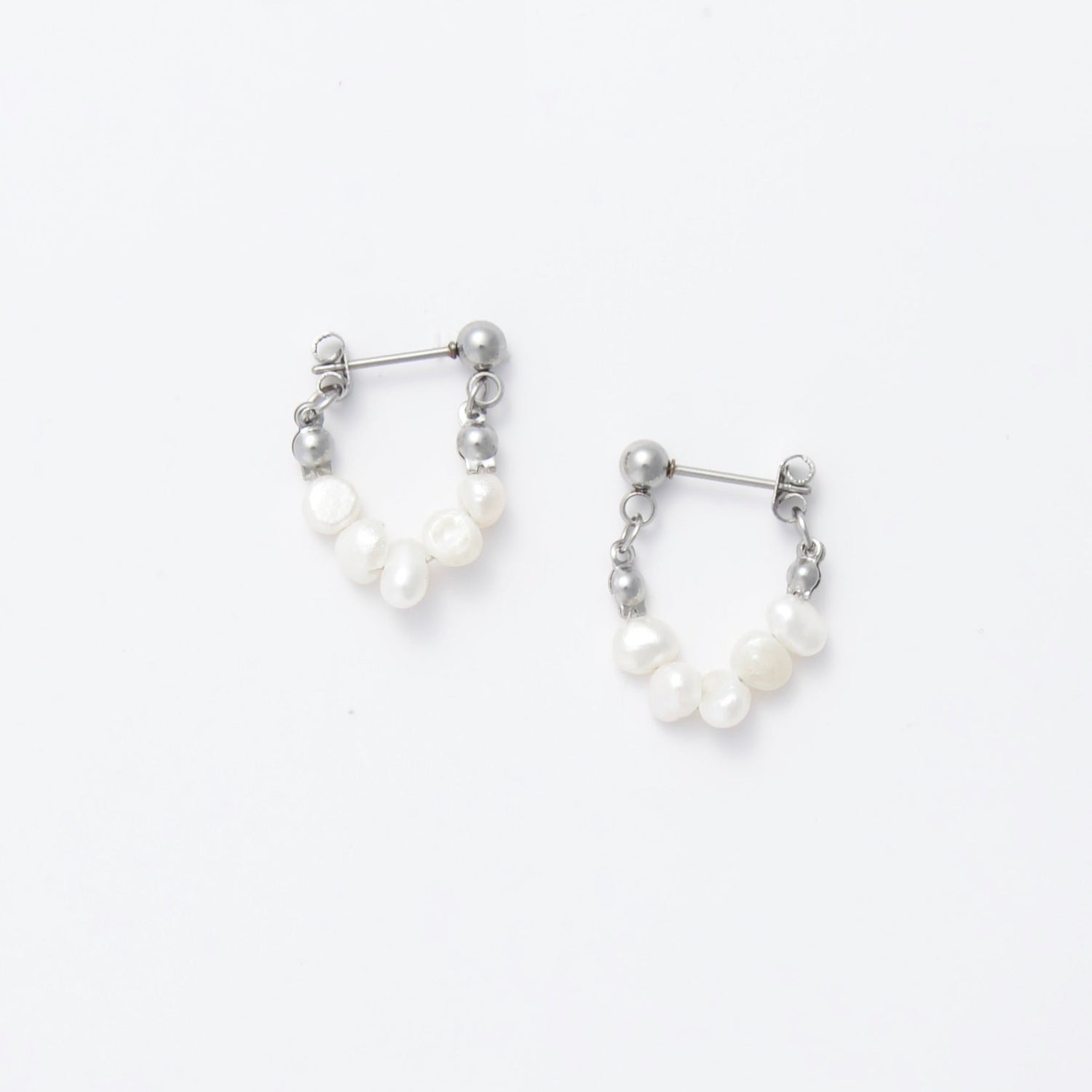
Pearl earrings are the classic bridal choice for good reason. The soft luminous quality of pearls reads beautifully in photographs, catches the light of the ceremony gently, and pairs with almost every dress fabric and color the bride might choose. A pair of pearl studs or pearl drops from the pearl beaded necklaces collection register carries the tradition forward into the modern wedding beautifully.
Sterling silver earrings offer a slightly cooler register that suits many brides beautifully. The metal picks up the light of the ceremony and catches the glow of afternoon or evening receptions in a way that pairs elegantly with white and ivory dresses. The 925 Sterling Silver Collection includes earring options that translate perfectly into bridal wear.
What necklace should the bride wear?
The best necklace for the bride depends on her neckline. A strapless or scoop-neck dress calls for a considered pendant or a delicate pearl strand. A V-neck dress pairs beautifully with a chain that follows the line of the V. A high-necked dress often works best with no necklace at all, letting the earrings and the dress carry the composition. An off-the-shoulder dress leaves room for a beautifully placed choker or short necklace.
The strapless dress and pearl strand pairing is one of the most classic bridal compositions in existence. A single strand of pearls sits at the throat, catches the ceremony light, and reads with the softness the day itself asks for. The composition has appeared in bridal photographs for a century and continues to work because the underlying principle is sound: the pearls provide the small elegant note the composition needs, and the dress does the visual work below.
The V-neck dress often calls for a small pendant on a fine chain that sits at the top of the V. The pendant creates a small visual anchor exactly where the eye lands, and the chain follows the neckline down to the point of the V without extending below it. This composition works beautifully for both silver and pearl pieces, and it translates seamlessly across ceremony and reception.
The high-necked dress is the one context where many brides choose to skip the necklace entirely. The neckline itself does the work of framing the face, and adding a necklace often reads as crowded. The bride in a high-necked dress typically relies on her earrings, her bracelet, and her rings to carry the jewelry composition of the day.
The off-the-shoulder dress creates a beautiful canvas for chokers or short necklaces. The exposed collarbone and shoulders give the piece a wide visual field, and a choker sits gracefully in the space the neckline creates. The choker necklaces collection offers pieces that translate beautifully into bridal wear for the modern bride choosing an off-the-shoulder gown.
What about the something old, something new, something borrowed, something blue tradition?
The traditional wedding rhyme invites the bride to wear four small elements: something old for continuity with the past, something new for the future, something borrowed for connection to loved ones, and something blue for fidelity. Jewelry offers the most natural way to fulfill all four elements gracefully.
Something old is often a piece inherited from a grandmother, a mother, or an aunt. A pearl strand passed down through generations, a small ring given at a milestone, a bracelet worn by the bride's mother at her own wedding all work beautifully. The piece carries the weight of family history into the day, and the bride wears the tradition forward into her own new chapter. The brand's longer reading on why the pearl becomes the heirloom covers the specific tradition of pearls as inherited pieces.
Something new is often a piece the bride has bought for herself or received as a gift specifically for the wedding. A pair of earrings, a small pendant, or a bracelet chosen for the day carries the fresh energy of the new chapter. Many brides choose their wedding day pieces to become part of their permanent daily rotation afterward, extending the day's meaning into the rest of the marriage.
Something borrowed is often a piece lent by a close friend or family member. The composition creates a small material connection between the bride and the loved one who lent the piece, and the borrowed element brings that person's presence into the wedding in a small quiet way. A pair of earrings, a bracelet, or a small pin all work beautifully for this role.
Something blue is the most creative of the four elements. Some brides choose small blue stones set in earrings or a pendant, some wear a small blue charm on a bracelet, some choose sapphire or aquamarine pieces from the birthstone tradition. The birthstone guide covers the meanings of aquamarine and sapphire, both of which carry associations with fidelity and truth that suit the wedding day beautifully.
How does the bride's dress guide the jewelry choices?
The bride's dress is the single strongest factor in her jewelry composition. The neckline, the beading or embellishment, the fabric, and the overall register of the dress all point toward specific jewelry choices that support rather than compete with the gown.
A simple sheath or minimalist gown calls for more considered jewelry that adds the visual weight the dress does not carry on its own. This is the composition where a bride might choose a more substantial pearl strand, more visible drop earrings, or a considered bracelet that reads clearly across a room. The dress provides a clean canvas, and the jewelry becomes the composition's primary visual voice.
An elaborate beaded or embellished gown calls for quieter jewelry that lets the dress do the work. Small pearl studs, a delicate chain if any, and a simple bracelet allow the dress to be the visual centerpiece without competing for attention. The bride's inherited pieces often work beautifully in this context because they read as meaningful rather than as decorative.
A vintage-inspired gown often pairs beautifully with vintage-inspired jewelry. A bride wearing a lace tea-length dress might choose a small strand of pearls and pearl drops that echo the 1940s or 1950s. A bride wearing a slip dress in the modern silhouette that references the 1990s might choose a chain choker with a small pendant, echoing the era's minimalist jewelry conversation.
A ball gown or princess-silhouette dress creates the widest visual canvas of any wedding dress style. The composition supports considered statement pieces at the ear, a delicate necklace, and a beautifully considered bracelet. This is the context where a bride might choose to wear more pieces than in other dress styles, because the gown itself carries enough visual weight to support them.
How does the bride wear her jewelry beyond the wedding day?
The best bridal jewelry becomes part of the bride's permanent daily rotation after the wedding. A pair of pearl earrings chosen for the ceremony continues to be worn to work, to dinners, to Saturday brunches. A small pendant received as a wedding gift becomes the chain the wearer reaches for on ordinary Tuesdays. The pieces that were on the bride's body during the wedding become the pieces that carry the day forward into the rest of her life.
The wearer who has been building her collection thoughtfully for years often finds that her wedding jewelry integrates naturally into her existing daily uniform. The pearl strand she wore to the ceremony joins the rotation in the dish on the dresser. The bracelet from her mother sits alongside her daily bracelets. The pieces do not stay in a special box waiting for anniversaries; they become part of the wearer's ongoing life. The brand's longer reading on what she wears when no one is watching covers the deeper register of the pieces that become part of the wearer's body across years.
The wedding ring occupies its own special category. The ring sits on the left ring finger from the day of the ceremony forward, becoming the most continuous piece the wearer will ever own. The brand's longer reading on what ring goes on which finger covers the specific tradition of the left ring finger and the meaning of the placement.
The bride at the dresser on the morning of the wedding chooses. She has been planning the composition for weeks or months, but the final choice happens in the actual moment of putting the pieces on. The earrings first, then the necklace if she is wearing one, then the bracelet, then the wedding ring itself at the ceremony. The pieces sit against her skin through the vows, through the kiss, through the walk back down the aisle, through the receiving line and the cocktail hour and the first dance. The composition holds through all of it because the bride chose it with attention, and the pieces do the small quiet work of belonging to her on the day she becomes a married woman. The wedding is the beginning of a marriage, and the jewelry is the small material evidence of it, carried forward into every ordinary morning that follows.