What to Wear to a Summer Bonfire
Share
The smell of smoke arrives before the fire does, carried across the lawn from the small pile of wood someone has been building since five. The light is starting to go. The sweater that did not seem necessary at six is going to be necessary by nine. The wearer has brought a bottle of wine to the friend who is hosting, a small bowl of strawberries she picked up at the Greenmarket on the way, and the chain she has been wearing since March, which is still at her collarbone and will be at her collarbone for the rest of the evening, catching the orange light when she leans forward to hear what someone is saying across the fire.
This is the small register the bonfire belongs to: low light, low stakes, low formality. The wearer is in a linen shirt or a thin sweatshirt over a sundress, hair down or loosely tied, no makeup beyond what she put on at six and has stopped thinking about. The jewelry she is wearing is the jewelry she was already wearing, with possibly one small addition for the evening register. The bonfire is not the kind of event that asks the wearer to change for it. The bonfire asks her to arrive as herself.
What jewelry should you wear to a summer bonfire?
The right jewelry for a summer bonfire is the daily pieces you already wear, with one small evening upgrade if the gathering calls for it. A thin chain at the collarbone, small earrings, a small ring or two. Nothing heavy, nothing that requires adjustment, nothing the wearer would be devastated to lose in the grass on the way back to the car.
The principle is the same one that governs most casual evening dressing: the wearer is not in performance mode. She is with people she loves, in a setting that does not photograph well from any single angle, doing things that involve smoke and grass and probably some movement of chairs and bottles across the lawn. The jewelry that works here is the jewelry that has already been on her body for the day and that she does not need to think about for the rest of the evening.
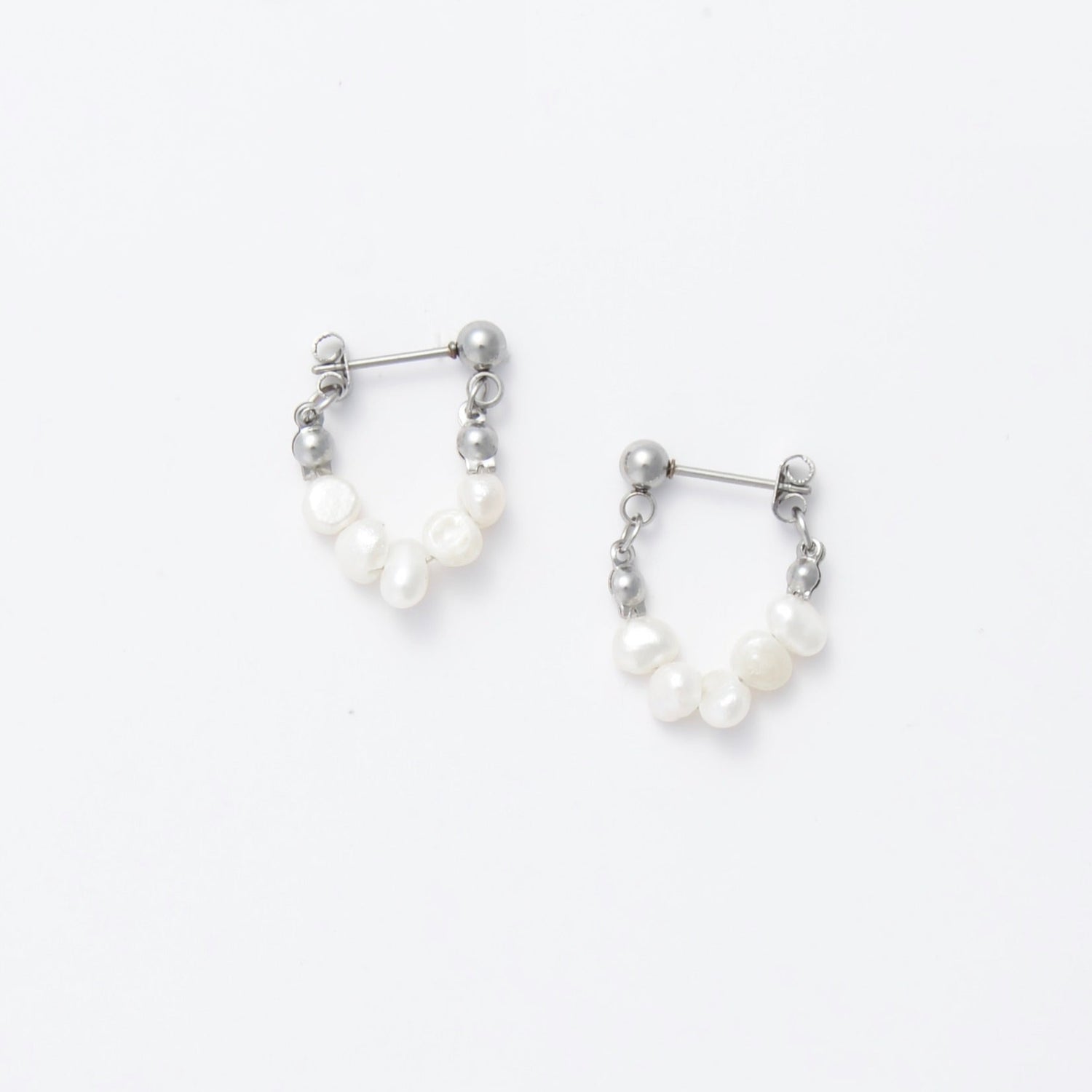
The one-piece evening upgrade is the small adjustment that registers without overcommitting. A pair of small drop earrings instead of the studs she was wearing at three. A thin layered chain added to the chain at her collarbone. A small pearl bracelet added to the wrist. One addition, not three, and the addition is chosen because the firelight will catch on it differently than the afternoon light did, not because the bonfire is a reason to dress up.
What survives the evening is the practical question. The chain that has been at her collarbone since March will survive the bonfire because it has been surviving everything else for the last four months. Sterling silver and stainless steel both handle the brief exposure to wood smoke without issue, and a quick wipe with a soft cloth the next morning is enough to keep either material looking the way it did before the fire. The brand's longer reading on why sterling silver tarnishes covers the deeper care question, but for the single evening of a bonfire, no special preparation is required.
What catches firelight best?
Silver catches firelight better than almost any other metal, particularly the kind of soft, low light a wood fire produces. The cool tone of sterling silver picks up the warm tone of the fire and creates a small visual contrast that warm metals like gold-plated stainless steel do not produce in the same way. The wearer in silver at a bonfire is, without trying, the wearer who looks composed in the light.
The reason for this is partly optical. Silver is more reflective than gold-tone metals, and the light of a wood fire is moving constantly, which means a silver piece catches and releases light dozens of times over the course of an evening in a way that a warmer metal does the same with less visual contrast. The wearer's chain, ring, or small earring picks up the fire and gives it back at a slightly different angle every time she turns her head, and the effect is small but real.
The 925 Sterling Silver Collection was designed for this kind of wearing, although the brand did not have bonfires specifically in mind when designing it. The pieces are scaled to be present without being loud, and the cool tone reads beautifully against the warm tones of late summer evening light. A thin silver chain, a small silver hoop, and a single silver ring is the most reliable bonfire stack the brand can recommend.
Pearls work in firelight too, though differently. A pearl strand will pick up the warm light of the fire and reflect it as a soft, luminous glow rather than a sharp catch. The effect is subtler than silver but no less beautiful. The wearer in pearls at a bonfire is the wearer who reads as soft and warm in the light, where the wearer in silver reads as composed and cool.
Gold-plated stainless steel is the third option, and it reads warmer in firelight than the other materials do. The warm tone of the metal matches the warm tone of the fire and produces a less contrasting visual effect than silver does. This is not a problem; it is a different aesthetic choice. The wearer who wants to disappear into the warm tone of the evening should choose gold-plated stainless. The wearer who wants to register against the firelight should choose silver.
What should you leave at home?
Leave at home anything heavy enough to feel during the evening, anything you would be devastated to lose in the grass, and anything that requires constant adjustment. The bonfire is the wrong event for statement pieces, irreplaceable inherited jewelry, and pieces with delicate clasps that come undone easily.
The lose-it-in-the-grass scenario is the most practical concern. A wearer at a bonfire is moving between her chair, the food table, the small group of friends standing near the fire, and possibly the bathroom inside the house. She is reaching for things, leaning forward, occasionally adjusting her hair when the wind shifts. The piece with a delicate clasp that has been on the borderline of loose for weeks will, statistically, come undone at the bonfire and disappear into the dark grass. The wearer who leaves that piece at home has not lost it.
The inherited-jewelry rule applies here as it applies to travel. The grandmother's chain, the mother's pearl strand, the engagement ring on its own. These are the pieces the wearer cannot afford to lose, and the bonfire is the kind of low-attention environment where pieces get lost. The wearer leaves them in the dish on the dresser at home and brings the daily pieces and the small evening addition.
The statement-piece rule is the soft one. A large pendant, a heavy bangle, a cocktail ring with a stone the size of a thumbnail. These are not pieces that get lost at bonfires, but they are pieces that do not belong at bonfires. The bonfire is a quiet event, and the statement piece is loud. The wearer who has shown up at the bonfire in her largest piece is the wearer who has misread the room, and the room is forgiving, but the misreading shows.
What the wearer brings instead is what she would have been wearing on any Saturday evening: the chain, the earring, the ring or two. The pieces are small. The pieces stay on. The pieces become part of how the wearer looks in the firelight without ever asking the room to look at them. This is what the brand's daily pieces were designed for, the small daily register that holds up across whatever the day or the evening turns out to be.
The Long Evening
The fire is going by nine. The wearer has been moving between the small group of friends near the fire and the table on the lawn where the wine and the strawberries are. The sweater she did not think she would need at six is on. The chain at her collarbone is picking up the firelight in small intervals, with the small ring on her right hand doing the same when she lifts the glass.
The conversation has been the slow kind. Someone has been talking about the apartment they are moving into in September. Someone else has been talking about the dog the friend's sister adopted. The fire has been crackling at the kind of intervals that fires crackle at, which is to say not on any schedule the wearer could predict. The cat, who is not at the bonfire, is presumably at home in the kitchen window, in the long evening light, doing the work of being herself, which is the same work the wearer is doing here in the firelight with the wine and the friends and the chain at her collarbone.
The pieces will come off at the dresser tonight, around eleven, when the wearer gets home and washes her face and the small smell of woodsmoke is still in her hair. The chain will go back in the dish. The earrings will go back in their slot. The small ring will stay on, because it does not come off. The pieces will be ready for whatever Sunday is going to be, and the bonfire will be one of the evenings that lives in those pieces from now on, in the small private way that summer evenings live in the pieces that were on the body during them.
The bonfire is the small event that does not ask for anything from the wearer. The wearer who has dressed for it correctly has, by morning, forgotten she dressed for it at all. The pieces that were on her body during it will carry the evening forward in the small way pieces do, and the wearer will reach for them again on the next Saturday evening, and the time after that, and the chain will be at her collarbone for whatever the summer turns out to be.