The Piece You Bought For Yourself
Share
The Piece You Bought For Yourself
The piece you bought for yourself is different from the piece you received, and the wearer who has bought a piece for herself in the last six months knows the difference without needing it explained. The chain you got for graduation, the earrings someone bought you for a birthday, the pendant left to you in a will: these are pieces with someone else's intention sewn into them, pieces that show up on your collarbone with a small attachment to the person who chose them. The piece you bought for yourself has none of that. It shows up clean, the piece you chose on the morning you chose it for reasons that have to be your own because no one else handed them to you. This is the smallest possible act of self-determination, and it is also the most reliable.
There is a small box from the brand on the kitchen counter. The box has been there since Tuesday, when the wearer came home from work, opened it, took the piece out, put it in the dish on the dresser, and left the box on the counter to be looked at again. The piece is a thin silver chain, slightly shorter than the chain already at her collarbone, designed to layer below it. She has been wearing the two chains together since Wednesday morning. The decision to buy it was made on a subway platform on a Monday in late May, when she was looking at her own collarbone in the reflection of the window of an oncoming train and realized that the chain she has been wearing since March wanted a second chain to live beside it, and the woman who could make that decision was the woman she had become.
The First Piece You Bought For Yourself
There is a woman on the F train on a Tuesday evening, late twenties, in a linen blazer, with a thin silver chain at her collarbone and the kind of unconscious composure that comes from having decided long ago that the chain is hers. She is reading a paperback. Her left hand keeps reaching up to the chain without her noticing. She did not get the chain from anyone. She got it from a small jeweler on the Lower East Side six years ago, the week she made it through her first apartment alone, and the chain has been on her since. The chain is the piece she bought to mark the moment, and the moment has stayed in the chain.
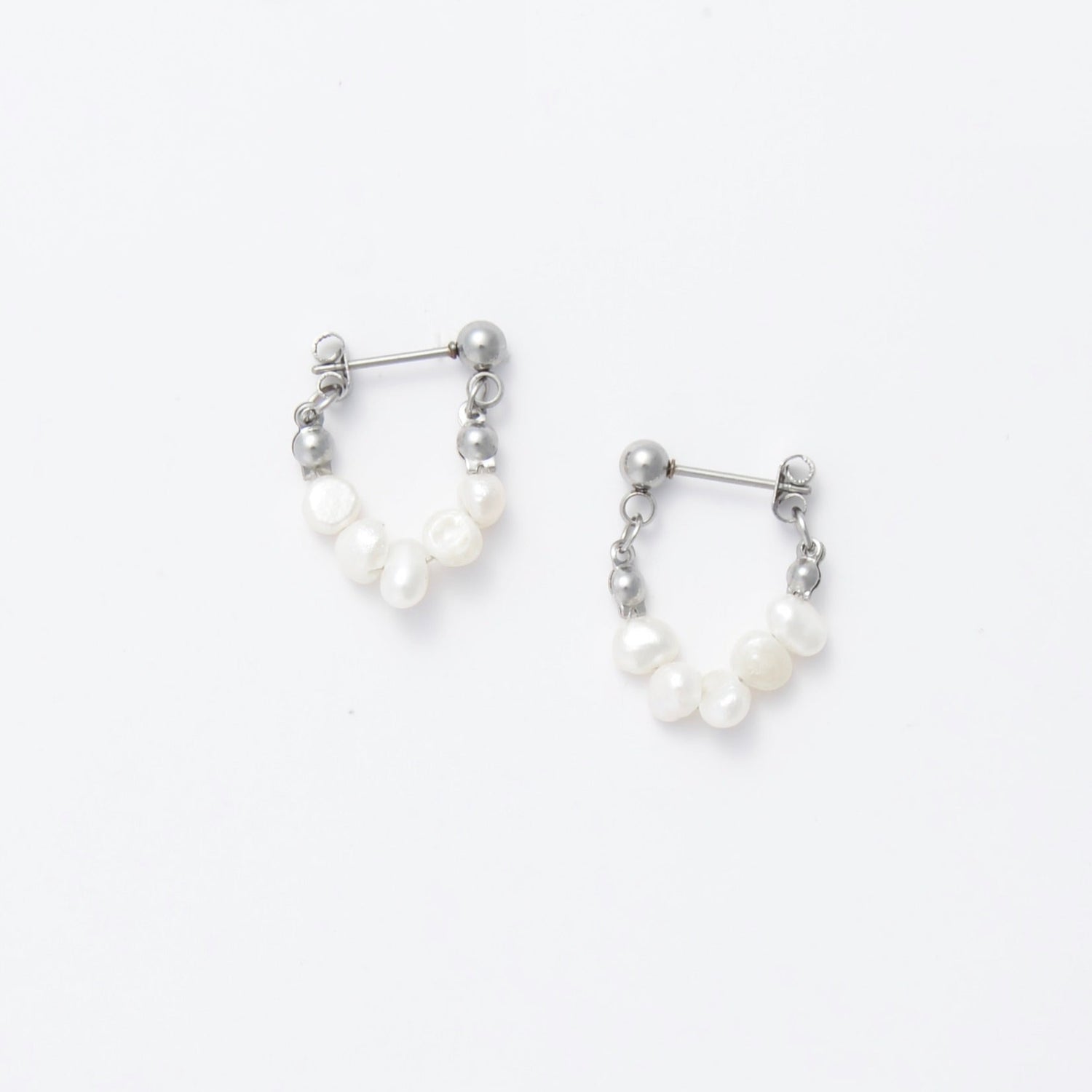
The first piece a wearer buys for herself is rarely the most expensive piece she will ever own, but it is often the piece she remembers longest: the small chain after the first paycheck, the silver ring after the apartment lease, the pearl earrings after the moving truck pulled away. The second chain comes later, after she has been at the city long enough to recognize that she is the person who knows what her collarbone wants.
There is a particular kind of pause in the moment a wearer puts a piece on for the first time and realizes that the piece is hers because she bought it. The pause is partly relief and partly recognition. The piece is not a token of someone else's love for her, but a token of her own recognition of herself, which is a different and more durable kind of statement to wear.
The wearer keeps a record of these pieces without keeping a record. The chain she bought after the move sits on the same shelf as the chain her grandmother left her, and the ring she bought for finishing residency sits on the same finger as the ring she has been wearing since college. The pieces accumulate on the body the way the years accumulate, and the pieces she chose for herself are the pieces that have a particular kind of weight on the skin: the weight of having been an act of her own intention.
The City Teaches You How
The city is full of women who bought themselves the piece they are wearing today. The wearer who has been at the city long enough has learned to see this, the same way she has learned to see who lives alone, who is on her way home from a job she likes, and who is moving through the morning with the kind of composure that does not get gifted to a person but has to be assembled out of her own daily choices.
The city teaches the wearer that nothing in her life is going to be handed to her unless she has already started doing the work to make it possible to be handed to her. The small daily act of buying her own jewelry is the version of this lesson she can carry around with her on her collarbone, the version she can look at in the mirror in the morning before deciding whether the day is going to be the kind of day she wanted it to be.
This is not a vanity argument and it is not a consumption argument. The piece on her collarbone is not the thing that makes her life work, but the small physical marker of a decision she has already made about who she is in the morning and what she has decided she wants. The wearer is not downstream of the piece; the piece is downstream of the wearer.
This is the argument the brand has been making for two years without quite naming it. The pieces at Glass Balloon were designed to be the pieces a wearer buys for herself: priced to make the decision possible on an ordinary Wednesday afternoon, scaled to be worn without removal across a full day, made with the kind of material restraint that does not announce itself across the room. The 925 Sterling Silver Collection is the most concentrated version of this idea. The pieces in that collection do not need to be gifted to mean something; they need to be chosen.
The wearer who has read the brand's recent essay on what the cat is will recognize this principle. The cat is the figure of self-containment, and the piece a wearer buys for herself is the small material instance of the same idea: the cat does not wait to be given the patch of sun, and the wearer does not wait to be given the chain.
The Dish on the Dresser
There is a dresser in an apartment on the Upper West Side, on the corner closest to the window, with a small ceramic dish on it the color of old bone. The dish has eight pieces in it this morning: a thin silver chain on top, a pearl earring without its match below it, a small charm beneath that. The wearer has not put any of them on yet. She is standing at the dresser in a soft gray T-shirt, with hair tied back, picking up each piece in turn, considering it, putting it back. She will choose two pieces, possibly three, the way she has been choosing every morning for the last ten years.
The dish on the dresser is the wearer's archive of these decisions. The dish is small, ceramic, off-white, and lives on the corner of the dresser closest to the window where the morning light catches it first. The pieces in the dish are the pieces the wearer reaches for at seven in the morning when she is half-asleep and getting ready for the day: the thin silver chain, the pearl earring, the small charm she bought for herself after the move.
The dish has, at any given moment, six to nine pieces in it. The pieces rotate. Some pieces are in the dish because they have been with the wearer for a decade and have earned a permanent place, while other pieces are in the dish because they have been with her for three weeks and are still on the trial period that the wearer will not admit to running on every new piece.
The dish is the wearer's small daily museum, and the curator is the wearer. The grandmother's chain is in there with the first chain she bought for herself after college, alongside the pieces she has bought in the last six months. The dish does not distinguish between gift and self-gift; it distinguishes only between pieces the wearer reaches for and pieces she does not.
The dish is also the wearer's private catalog of luck, the small archive of pieces tied to specific decisions. The brand has written about this catalog in a recent essay on lucky jewelry and the pieces a wearer reaches for. The pieces that are lucky are the pieces that were chosen by the wearer for the wearer.
What the dish has taught the wearer over a decade of running it is that the pieces she has bought for herself are, with very few exceptions, the pieces she reaches for most often. The pieces she received are sometimes in the dish for years before she puts them on, while the pieces she chose for herself rotate onto her body within a week of arrival and become part of the daily uniform.
This is not because received pieces are less loved. They are often more loved, more carefully considered, more layered with memory. It is because received pieces have to be made the wearer's own before she can wear them with the kind of unconscious daily ease that distinguishes a piece worn for itself from a piece worn for its associations. Self-bought pieces start out as the wearer's; received pieces have to become hers.
This is the small argument behind self-gifting that does not get made often enough. The piece you buy for yourself is the piece that does not need translation; the piece you receive is one you have to translate into the wearer over months or years. Both kinds of pieces belong on the body, but the piece you bought for yourself starts the relationship already in the wearer's own voice.
The small box from the brand is still on the kitchen counter. The wearer has been wearing the new chain for four days now, layered below the chain she has had since March, and the two chains have started to behave as if they have been together for longer than they have been. The new chain has settled, and the collarbone has accepted it. The morning ritual at the dresser has expanded to include it, and the wearer has stopped thinking about whether to put it on, which is the small sign that the piece has joined the daily life.
There is no plaque on the dish that says which pieces the wearer bought for herself and which were given to her. The dish does not need that information, and the wearer does not need it either, because the dish is the record of her daily reaching, not the record of who put what in her life. The pieces that get reached for most are the pieces that are most hers, by whichever route they arrived. But the wearer knows. The wearer knows the difference between the piece on her collarbone that came from her grandmother and the piece on her collarbone that came from a Monday morning on the subway when she looked at her own reflection and decided what she wanted.
This is the smallest possible act of self-determination, and it is the daily one. The wearer carries it on her collarbone into every room she walks into for the rest of the day, and she will be wearing it on the morning she decides, again, that today is going to be a day in which she is the person who chooses.