The Jewelry She Has Had for Ten Years
Share
The Jewelry She Has Had for Ten Years
She doesn't think about it anymore. It goes on in the morning the way her shoes do, or her coat, not a decision, just a sequence. The ring. Then the chain. Sometimes the small hoops if she remembers they're there. She has had these pieces so long that choosing them stopped being a choice.
That is what jewelry becomes when it is worn long enough. Not an accessory. A fixture. Something so embedded in the daily routine that its absence is more noticeable than its presence.
This post is about that category of piece. The one that has lasted ten years. What makes something earn that kind of staying power, and what it means to find it before you've spent a decade trying.
What Ten Years Actually Looks Like
A piece that has been worn for ten years looks different from one that was bought ten years ago and worn occasionally.
The first has a particular quality to it. Sterling silver develops a warmth where it has been handled repeatedly. The high points of a ring (the ridge, the edge) go slightly brighter than the recessed areas, which hold a deeper tone. This is not tarnish in the sense of neglect. It is patina in the sense of proof. The piece has been somewhere. It has been part of something.
A piece stored in a drawer for a decade just looks old. A piece worn for a decade looks inhabited.
There is no shortcut to that quality. It only comes from wearing. From the oil of a hand, the warmth of a collarbone, the slight friction of daily life. The silver earns it slowly, and the person wearing it earns it too, the knowledge of a piece's weight, its sound, the way it moves.
Why Some Pieces Last and Others Don't
Not every piece survives a decade of wear. Some disintegrate materially. Some get lost. Some get outgrown, not physically but identionally. The person wearing them becomes someone else, and the piece doesn't follow.
The ones that last tend to have a few things in common.
They are simple without being plain. A piece that has nothing to catch the eye eventually stops being seen at all. But a piece with too much going on, too many elements competing for attention, becomes exhausting to look at over years. The pieces that survive long wear are usually the ones that reward closer attention without demanding it. A slight hammered texture. A chain with a particular rhythm. A band that catches light at an angle no one else notices.
They are made from materials that age honestly. Sterling silver tarnishes, and that tarnish tells a story. A piece that looks exactly the same after ten years of daily wear either wasn't made from real silver or was never truly worn. The ones people keep for a decade are the ones that change with them, that accumulate a particular finish that belongs to that person and no one else. The 925 sterling silver collection works this way. It ages into something individual.
They fit the body rather than sitting on it. This is harder to articulate but easy to feel. A ring that sits right on the finger doesn't remind you it's there. A chain that hits at exactly the right length looks like it was always meant to be there. The pieces that get worn for ten years are usually the ones that stopped requiring adjustment within the first week.
The Pieces That Usually Earn That Decade
Some categories reliably survive long wear. Others almost never do.
Bands. A simple ring with no stones, no setting, no element that can snag or loosen over time. Something to stack, or to wear alone. A sterling silver band is one of the most durable formats in jewelry: nothing to lose, nothing to break, no part of it more fragile than the rest. A woman who has had a band for ten years has usually stopped noticing it is there, which is precisely why she would notice immediately if it were gone.
Fine chains. A chain worn at the right length becomes invisible in the best possible sense, felt, not seen. The pieces in the all-necklaces collection that tend toward the delicate end are the ones most likely to travel across a decade unchanged in form, even as they accumulate the slight warmth of long wear.
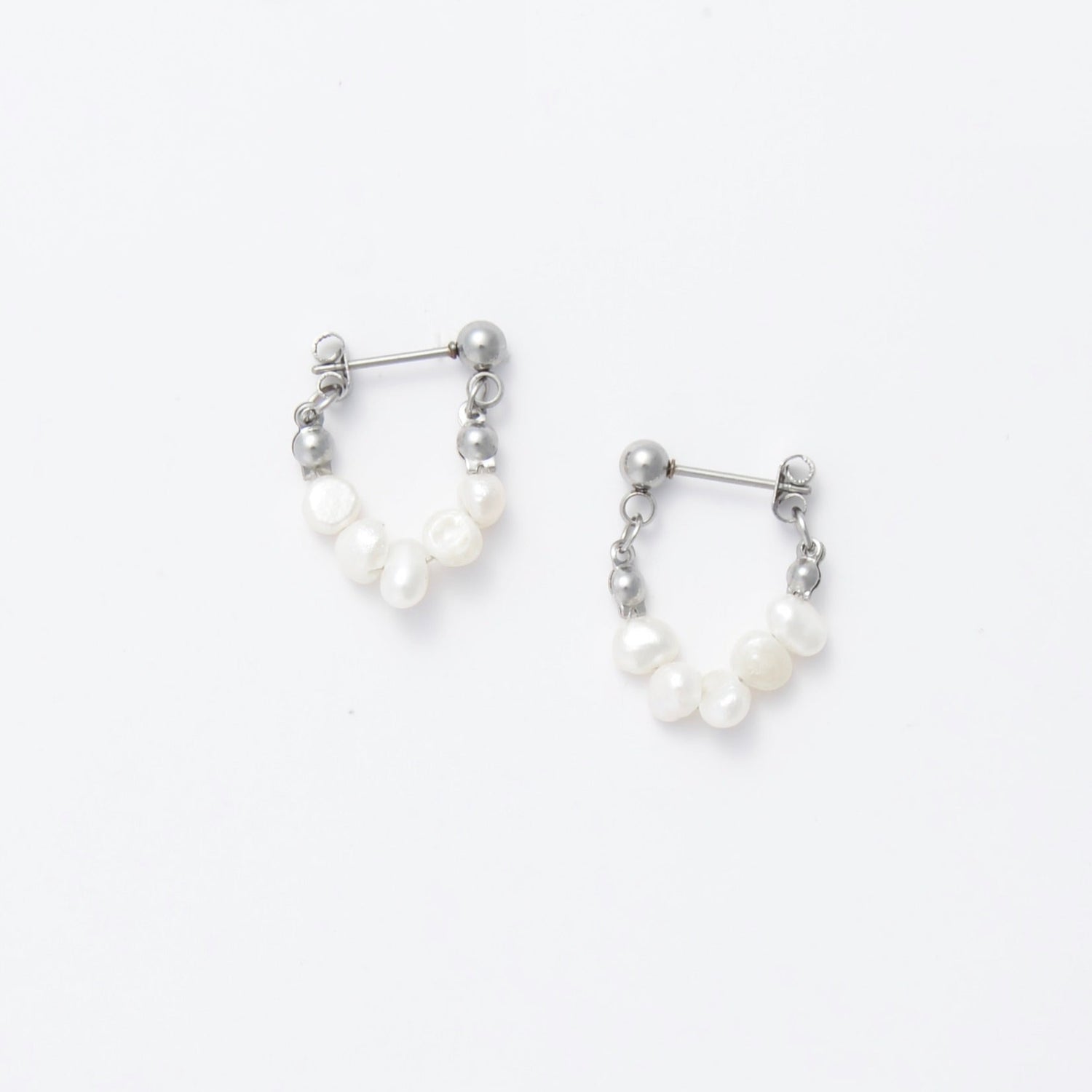
Small earrings. Huggies, small hoops, studs. The pieces that go in and stay in. They don't require decision-making. They are there or they are not, and when they are, they do their work quietly. The ones from the all-earrings collection that hold their shape through heat and pressure and forgetful sleeping are the ones worth keeping close.
The category that almost never makes it to ten years: anything trendy, anything dependent on a fashion moment that has since passed, anything with a stone in a setting that was chosen quickly and worn rarely.
The Difference Between a Piece You Love and a Piece You Wear
They are not always the same thing.
There are pieces she loves to look at and never puts on. They require something from her, a certain outfit, a certain occasion, a level of intentionality she doesn't always have on a Tuesday morning. They live in a dish or a drawer and come out when conditions are right.
The pieces she wears every day are a different category. They require nothing. They are there because the absence of them would create a small, specific wrong note that she would notice and no one else would.
This is worth paying attention to when buying jewelry. Not just: do I love this? But: will I wear this? The question of wearability is harder to answer in a store or in a product photo. It requires imagining the piece at 7am when nothing has gone right yet and she is already running late. If it still makes sense in that context, it probably belongs to the ten-year category.
The post on what your jewelry says in the first five seconds covers this from a different angle, the way a piece communicates before you've said anything. The pieces that last ten years tend to say something true about the person wearing them, without requiring that person to think about it.
What You're Actually Looking For
Most people can't say in advance which piece will become the one they have for ten years. It reveals itself through wear rather than selection. But there are conditions that make it more likely.
You're looking for something with a finish that develops rather than degrades. Sterling silver meets this. Plated metals often don't: the base material underneath the coating is usually less interesting than the coating itself, and once the coating wears through, the piece becomes something it wasn't designed to be.
You're looking for a piece with no weak point. A pendant with a loop that can bend. A chain with one link that was always slightly thinner than the others. Earring backs that loosen. These are the things that end a piece's run, not dramatic failure, but a small vulnerability that accumulates into a problem. The jewelry care guide covers what to watch for.
You're looking for something that works with your body specifically. Not jewelry in the abstract, but this piece at this length on this person. A ring that is borderline in terms of sizing will become uncomfortable in summer when hands swell slightly. A chain that sits almost right but not quite will spend a decade being adjusted rather than worn.
And you're looking for something you could describe without holding it. Not a specific feature, but a quality. The heaviness of it. The sound it makes against a table. The way it sits against the collarbone on a warm afternoon. If you can picture it in that kind of sensory detail, it is probably already the kind of piece that earns ten years.
A Piece That Already Has That Quality
Sometimes the piece that lasts ten years isn't bought new. It was already someone else's for a while before it became yours.
A ring that belonged to an aunt. A chain from a city she no longer lives in. Something found in a market before she knew what she was looking for. These pieces come with a history already accumulated. They don't need to earn their weight. They arrived with it.
The ones she buys new can still get there. But they have to be worn. Left in a drawer, a piece stays exactly what it was the day it arrived. Worn, it becomes something else. Something specific to the life it has been part of.
That is what ten years actually means. Not the number. The accumulation. The moment it stops being a piece of jewelry and starts being part of how she moves through the world.
She doesn't think about it anymore. It just goes on.