The Things You Did Not See Until You Were a Mother
Share
You did not see her doing any of it. You were eight years old, and you wanted juice, and the juice was always in the fridge, and you did not understand that the juice was in the fridge because someone had bought the juice on Tuesday, remembered you preferred the kind with no pulp, paid for it, brought it home, refilled the bottle, and put it on the second shelf where you could reach it. You did not understand because there was no reason for you to understand. The juice was just there. That is what mothers are when you are eight.
Years pass, and then a child, and then your own.
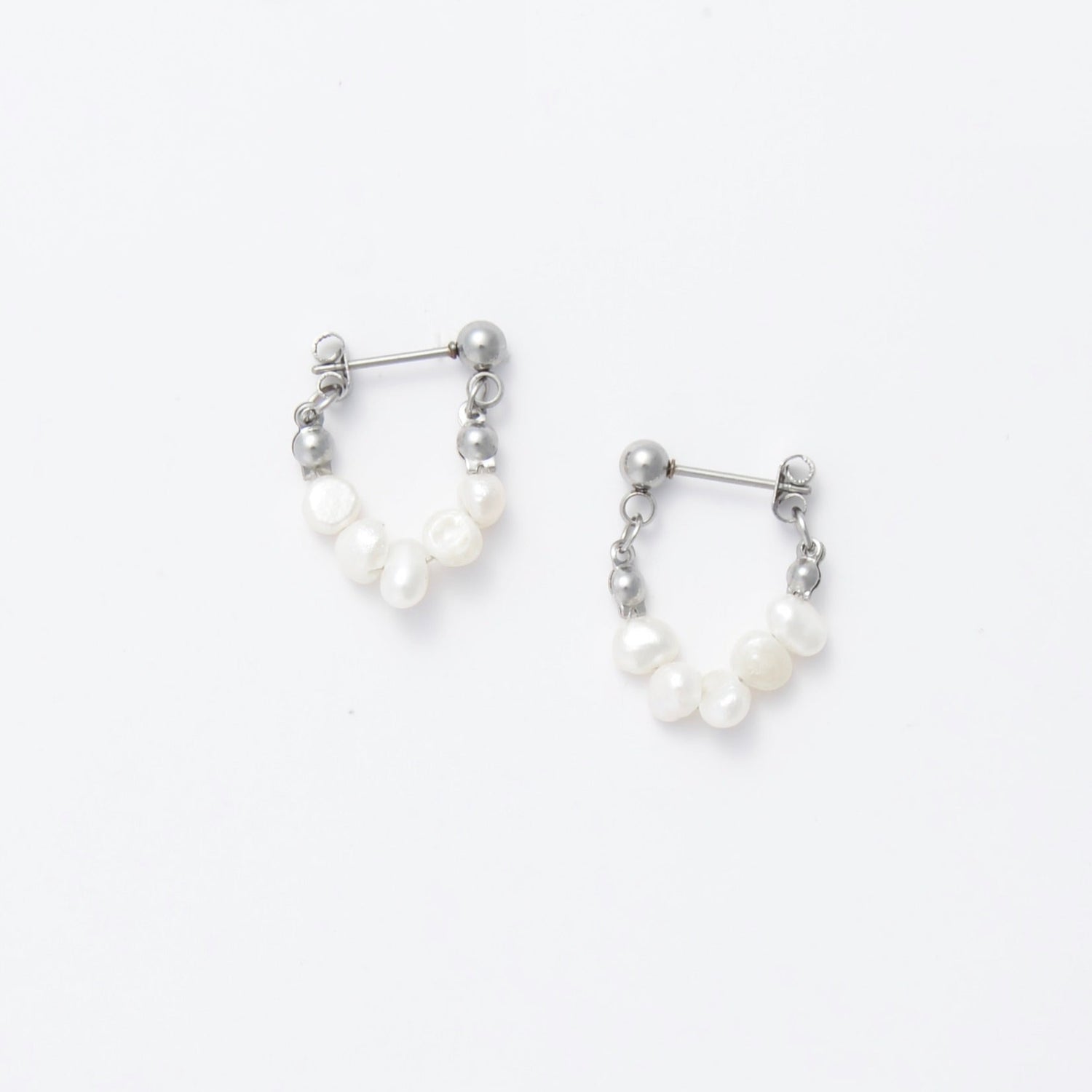
This is a Mother's Day post about what you did not see until you became her. The structure follows the realization itself, which arrives not in order but in flashes, in the order memory hands them to you. Somewhere in the middle of it, the resentment you carried for your mother quietly stops being resentment, and what is left is closer to recognition. The Glass Balloon piece at the center of this post is a freshwater pearl, because pearls are formed by the same mechanism: pressure, time, accumulation, the slow turning of friction into something a daughter eventually wears against her skin without remembering why. The hero collection is 925 sterling silver, because silver does not announce itself, and the work being honored here also does not announce itself.
The first time
The first time the doctor takes the baby to the corner of the room with the syringe, you stand against the wall and try to look like a mother. The baby is six weeks old. She does not yet know what it is to be afraid. She is about to learn, in front of you, while you stand there. The needle goes in and the cry that comes out of her is not the cry you have heard before. It is the first time she has ever cried like that. You do not know what your face is doing.
You realize, three seconds later, that you are also crying, that you have been crying since the second the cry started, that the two of you have started crying at the same time and from the same place. The doctor smiles kindly. He has seen this many times. He does not yet know that this is the moment your own mother becomes a different person in your memory, retroactively, all the way back to your own first vaccines, where she also stood against a wall, where she also cried.
Eleven forty-seven
There is a class project due in the morning. The child has known about it for three weeks. The child has not done it. The child is asleep upstairs, breathing the easy breath of someone for whom problems do not yet exist outside of a small window of about forty minutes. It is 11:47pm. You are at the kitchen table with construction paper, a glue stick, three printed images you found online twenty minutes ago, and a feeling that is not anger but is not patience either. You are making a poster about the water cycle. The poster will be turned in tomorrow with the child's name on it.
The child will not know you stayed up, the teacher will not know, no one will know. You will know. Your mother knew, the night she finished your fifth grade project on the Aztec calendar at 2am, and you went to school the next day and got a B+ and complained that it was not an A. Your mother's face when you complained: you remember it now, twenty years later, sitting at this table at 11:47pm, looking at an unfinished water cycle. You finally understand what was on her face. It was the same thing on yours.
The phone rings on a Thursday
Your phone rings at 2:34pm on a Thursday. You are at work. The call is from the school. The voice on the line says "your child is in the principal's office," and you do not hear the rest of the sentence because something in your chest has already decided that whatever happened, happened. The next forty seconds are the longest forty seconds you have ever experienced as an adult.
By the time the voice gets to the actual reason, which is a small thing, a misunderstanding, no one is hurt, your hands have gone cold and your face has gone hot and you have not yet started breathing again. You do not return to work that afternoon. You go home and sit in your car in the driveway for ten minutes before you can go inside. Your own mother, you realize, took calls like this for eighteen years. She took them at the office, in the grocery store, in the middle of dinner. She never told you about the ten minutes in the driveway. You assumed she did not have them. She had them every time.
Three hours, five bags
You spend three hours making the meal the child said she wanted. The chicken is the way she said she liked it, the rice is made the way you remember your own mother making it, the small dish of marinated cucumbers sits at the side of her plate exactly as she asked. She comes down at 7:14pm, eats four bites, says she is full, and goes back upstairs. An hour later you find five bag wrappers in the trash can in her bedroom. You stand there in the kitchen looking at the wrappers. The chicken is going cold and the rice is going cold and the small dish of cucumbers sits untouched. You understand your own mother for the first time, somewhere between the third bag and the fifth.
She was new at this too
What you finally understand, the night of the chips, is that your mother was also doing this for the first time. She was not a fully formed person who knew what she was doing. She was a woman in a kitchen, the same age you are now, looking at the same evidence of being unseen, with the same cold dinner going colder. She was figuring it out, and she was also a person. She was twenty-eight or thirty-four or forty-two, in some kitchen, in some year, with some version of you upstairs eating chips, and she did not know any more than you do how to do this. She just kept doing it.
The resentment goes quiet at this point. Not because it was wrong, but because it stops being relevant. You cannot resent someone for not knowing how to do something they were also doing for the first time. You can only recognize them.
This is the realization that arrives, at some point, to anyone who becomes a mother and had a mother. It does not arrive on a schedule. For some daughters it arrives when their first child cries. For some it arrives at 11:47pm with a poster about the water cycle. For some it arrives in a driveway after a phone call. For some it arrives the night the chicken went cold. The mechanism is the same. You experience the work, and the woman who did it for you becomes legible, in retrospect, all the way back to the beginning of your life.
What you give her now
The piece to give her this Mother's Day is something she can wear every day, in 925 sterling silver, that she will not take off. A simple silver band, a pair of small earrings, a pearl piece if she has not already left you hers. The pearl is the most maternal object in jewelry, not because it is what mothers wear, but because it is what mothers become. Pearls are formed slowly, around something small that began as friction, by the same mechanism by which you have just been formed. The longer reading on what pearls actually are lives in the pearl guide.
The editorial press treats pearls as the maternal archetype every May, and has done so for at least a century. Pearls have been carrying this metaphor longer than any of us have been carrying anything. Whatever piece you give her, in whatever metal, the meaningful thing is that the piece sits on her body every day, in plain sight, where she can see it on herself and where you can see it on her, cleaned and kept the way pieces of evidence are kept. A piece for everyday wear is a different gift from a piece for occasions, because the occasion ends and the everyday continues.
Whatever the piece is, it is small evidence that you have started to understand. It is a thing she can wear on the next afternoon her own daughter eats chips. The piece will not erase the cold dinners. It will sit on her body anyway, every day, where she can see it, where you can see it on her, where one day your own daughter will see it on her grandmother and not yet understand. There is no shortcut for the daughter. She will get there in her own time, the way your mother got there, the way you have just gotten there.
You bring the cucumbers down to the dog and the dog eats them all. You put the chicken in a container for tomorrow. You wrap the rice in foil. You text your mother to thank her for everything she did when you were eight, and you do not specify what, because she will know what.
She knows what.
Tags: glass balloon, mothers day, mothers day jewelry, mothers day gifts, sterling silver, pearl jewelry, mothers day 2026