The Lily and the Pearl
Share
It is the first Saturday in June and there is a single white lily wrapped in brown paper on the counter, waiting to be put in water. I bought it at the bodega on the corner ten minutes ago, after spending five minutes choosing between the lily and a single peony. The peony lost, narrowly. It will keep blooming for another week at the bodega. The lily, on its own stem in a black plastic bucket of water, was looking at me in a way that made it impossible to leave. I do not know how to explain this except to say that some flowers ask to come home with you and the wearer who has bought enough of them eventually learns to listen. There is now a small clear glass on the kitchen counter, with the lily in it, doing what a single white lily in a small clear glass on a kitchen counter does in early June, which is be the room. The basil on the windowsill, the chain at my collarbone, and the lily on the counter are all doing the work of small specific things, each in its own register. The lily, the most recent arrival, has done the work fastest, which is to say it has turned the room from a space the wearer occupies into a room the wearer lives in.
The single stem rule
The principle is straightforward: one flower in a small glass is more powerful than a bouquet in a tall vase. The reason has nothing to do with cost or minimalism or any of the other reasons people give for buying single stems instead of bouquets. The reason is compositional. The bouquet asks the eye to take in too much; the single stem asks it to take in exactly enough. A room with one white lily in a clear glass has been styled, whereas a room with twelve white lilies in a tall vase has been decorated. The two are different practices, and the practice the brand has been built around is the first one. This is, I have come to understand, the same principle that governs everything else in a Glass Balloon photograph. The image with one piece of jewelry and one flower on a stone surface is the image that has worked, again and again, across two years of testing. The image with three pieces of jewelry and a full bouquet is the image that has not. The single stem and the single piece are doing the same work. They are functioning as the small specific thing that makes the larger composition cohere.
Florals as the cherry on top
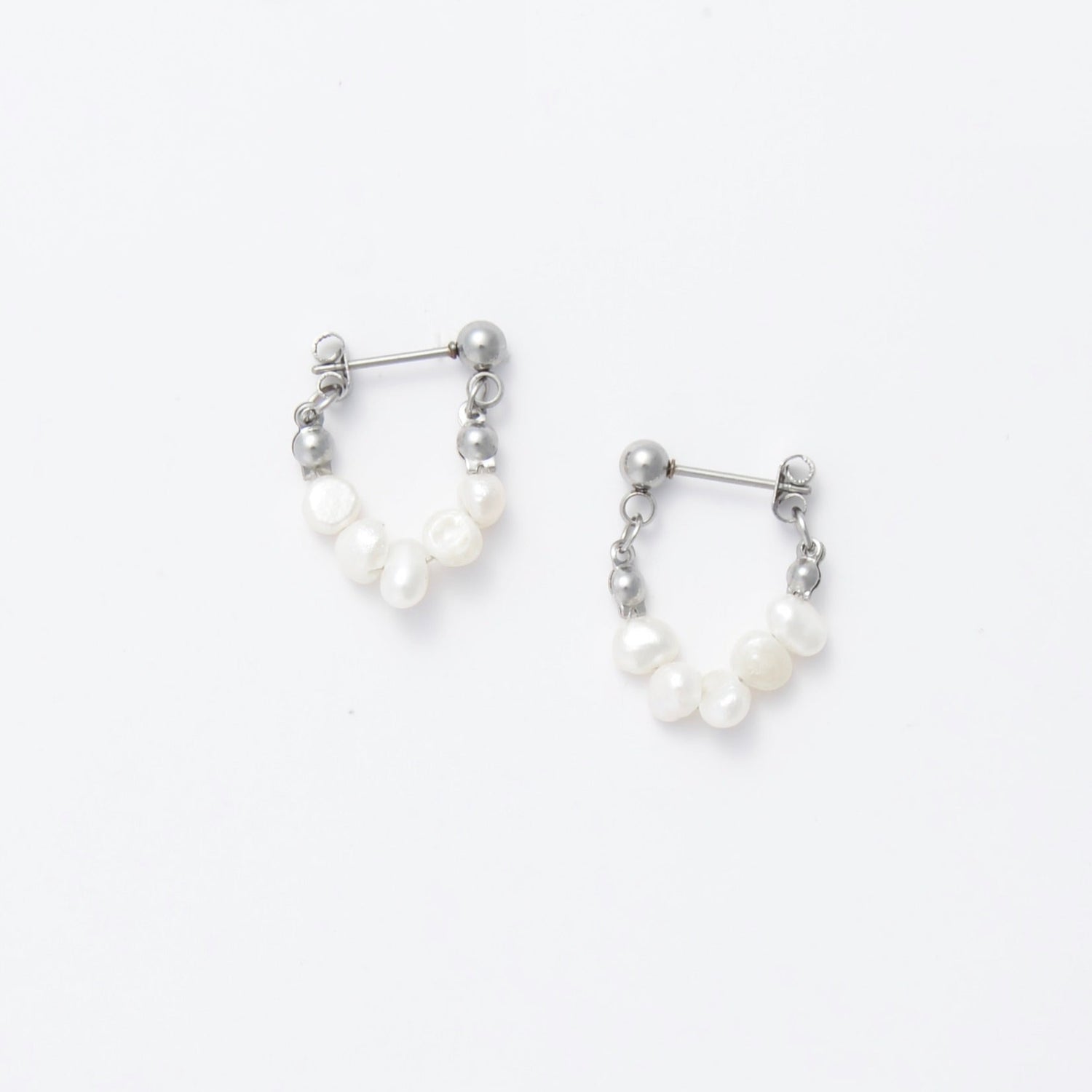
There is a rule the brand has been following without quite naming it: florals are the cherry on top inside the restrained dark editorial register. The composition is mostly stone, mostly metal, mostly shadow, and then there is a flower. The flower changes the whole image. The flower is not the subject, since the jewelry is the subject, but without the flower the image is austere, and with the flower it is alive. This is the principle the brand's Instagram has been working with for the last two years, in the compositions that pair the pearl beaded necklaces with lilies. The pearl strand is the jewelry, and the lily is the flower. The two of them sit on a stone surface, in the kind of light that does the same work for jewelry as it does for the lily, which is reveal them both as soft warm objects in a cool dark room. The composition would not work without either element, and both have to be there, in their right proportions, for the image to do what the image is asked to do.
The flower and the jewelry
The flower and the jewelry have a few things in common that I have only recently started to articulate. The brand's summer jewelry guide laid out some of the principles for what jewelry wants in summer, and the same principles apply to what flowers want, which is partly why the two of them belong on the same surface in the same warm afternoon light. Both are organic on some level, given that the pearl was grown by a living creature and the lily grew from a bulb in soil. They are also both slightly impermanent, though on different timescales: the pearl will dim slightly over decades without care, and the lily will be gone in five days regardless of care. They ask for the same kind of light, which is warm afternoon light coming in from the side, and they reward being looked at slowly, in a small room, by someone who has chosen to pay attention. This is, I think, why florals and jewelry photograph so well together. They are made of the same kind of attention. The viewer who is drawn to the image of a pearl strand next to a lily on a stone surface is drawn to it because the image is asking her to slow down enough to see two soft things in cool light, and her body wants to slow down enough to do that. The image is doing what good jewelry is supposed to do, which is make the wearer slightly more present in her own room.
There are, for what it is worth, traditional pairings that work in the same way as the pearl and lily. The brand has been photographing pieces from the 925 Sterling Silver Collection with garden roses through the spring, the dusty pink kind that have layers of petals and a slight scent, and the silver and the rose do the same conversation the pearl and the lily do, which is meet each other in warm afternoon light without either taking over the image. The other pairings are out there: gold with freesias, charm necklaces with sweet peas, pearls with peonies if the wearer is feeling generous with the composition. The principle is the same one. The flower and the jewelry have to be operating at the same register of attention to belong on the same surface.
The lily on the counter will be gone by Wednesday. It will start to brown at the edges of the lower petals by Tuesday afternoon. By Friday I will have removed it from the glass, dropped it in the trash, and probably left the glass empty for a day or two before walking back to the bodega to buy another single stem. This is the rhythm: the flower comes in for five days, and the chain at the collarbone stays for years. The kitchen counter is the room where both of them do their work, the brief work of the flower and the long work of the piece, in the same warm afternoon light that makes both of them visible. The brand's pearl guide covers more of the long work, for the wearer interested in what pearls do across years of being worn through summers like this one. There is something honest about this arrangement, where the flower will not last and the jewelry will. The room is made by both of them being there at the same time, even though they are operating on different clocks. The wearer who understands this also understands the principle that has been quietly governing every Glass Balloon composition for two years, which is that the small specific thing on the surface, the flower or the piece or the cherry on top, is what makes the room a room rather than a space.