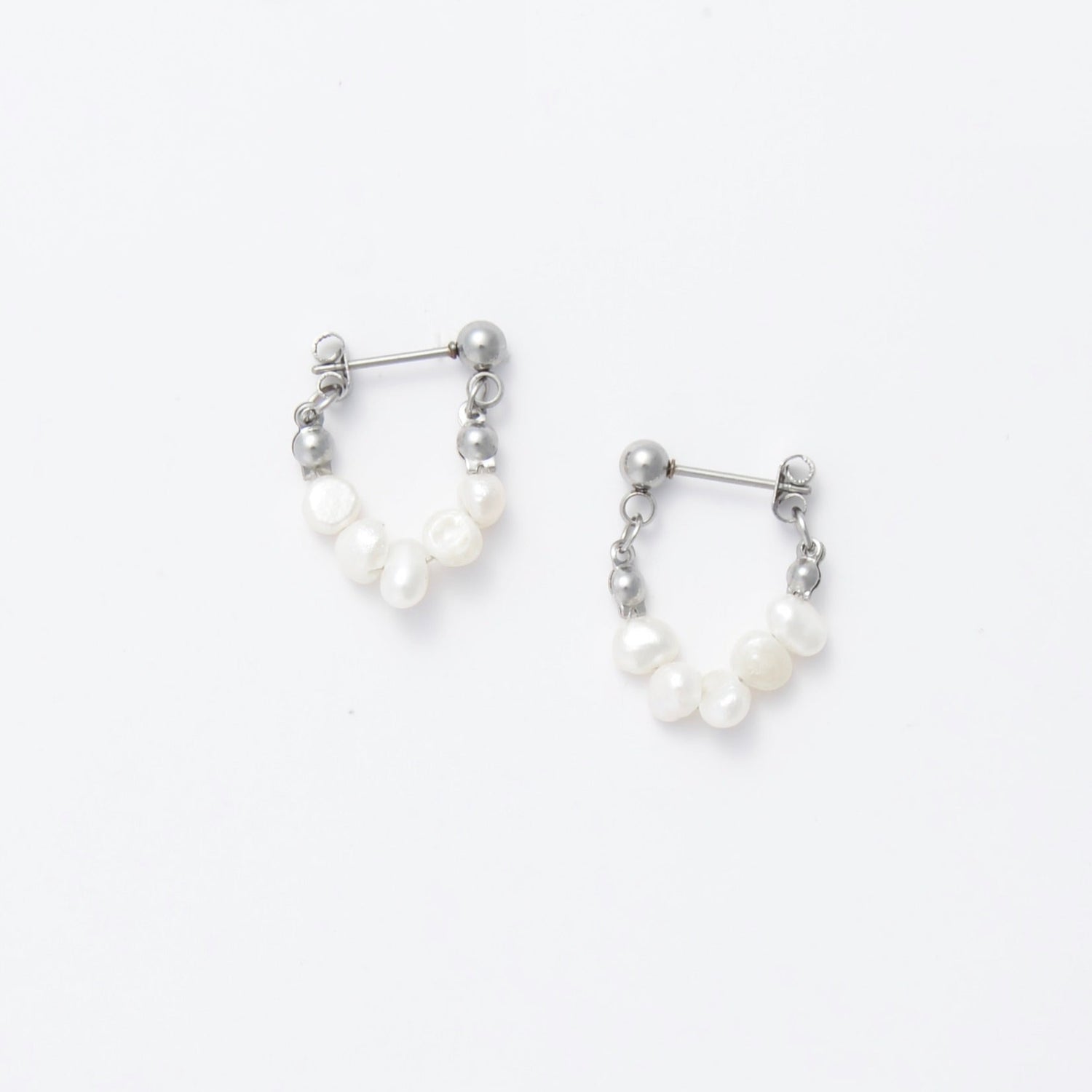
The Jewelry Trends of 2026, and Who Decides Them Now
Share
The Devil Wears Prada 2 opened in theaters on May 1, almost twenty years to the day after the original. Three days later the Met Gala invited its guests to dress as art objects. Within the same week, the fashion press declared quiet luxury dead, declared maximalism back, declared the rules of personal style officially in flux.
Reading all of this in one week, on the train and at the desk and in the small windows between meetings, what I noticed was that the rules of personal style have not been in flux for a long time. They simply stopped existing, and the press is now catching up to that.
Twenty years ago, Miranda Priestly told an assistant that the color of her sweater had been chosen for her years earlier by people she had never met. The cerulean monologue was the original film's central thesis, and it described a system that no longer exists. The system in which a handful of editors in Manhattan offices determined what would be worn, and then that decision moved downward through magazines and department stores and into the closet of a girl in Cincinnati who did not know she had been styled.
The system is gone. There is no Miranda Priestly anymore, and there is no longer one office. There is a feed, and an algorithm, and a million wearers making decisions in parallel about what means something to them.
What is actually happening in jewelry in 2026 is not what the trend reports say is happening. The trend reports say sculptural earrings, body chains, the brooch comeback, maximalism. What the wearer is actually doing is more interesting than any of that. She is putting on what is hers.
What Are the Biggest Jewelry Trends of 2026?
The biggest jewelry trends of 2026 are charm necklaces, layered chains, mixed metals, pearls worn unconventionally, and sculptural sterling silver pieces. What these have in common is not a single aesthetic but a posture, which is the wearer making her own combinations from her own collection rather than buying a complete look from a single source.
You can see the posture most clearly on TikTok, where the most-saved jewelry content in the first half of the year has been close-up videos of women showing how they layer pieces they have collected over years. The pieces themselves are not always notable. The arrangement is.
A fine silver chain over a heavier silver chain over a pearl strand from a grandmother. A charm necklace next to a pendant from a different decade. Three rings on one finger, none of which were made to be worn together. The content is not selling individual pieces. It is selling the act of choosing.
This is the part the runway reports miss when they describe a season in terms of single trends. The Met Gala's “Costume Art” theme drew out body-oriented pieces like Emily Blunt's Mikimoto body necklace draping pearls over her arms and chest, and Irina Shayk wore an entire outfit made of jewelry, designed by Alexander Wang, using watches and rings and necklaces in lieu of fabric. These were the spectacle. They are not the trend.
The trend, if you can call it that, is what the woman watching the red carpet did the next morning when she opened her own jewelry dish and put on the chain her sister gave her, the ring she bought in Lisbon, and the small pearl earrings she has worn since she was twenty.
Why Charm Necklaces Are Everywhere Again
Charm necklaces are everywhere in 2026 because they let the wearer carry symbolic objects on her body in a way that no other piece of jewelry does. Each charm means something to her specifically, which is the opposite of what generic jewelry does. The independent jewelers who built the modern charm category through the 2010s set up the wave, TikTok amplified it through the 2020s, and the impulse toward personal meaning is what makes the category resistant to going out of style.
A charm necklace is also one of the few jewelry categories that gets better the longer you keep it. The first charm is just a piece. The third charm is a small inventory. By the time there are seven charms on the chain, each added at a different moment in the wearer's life, the necklace has become something closer to a record than a piece of jewelry. It cannot be replicated by buying the same components, because the meaning is not in the components.
The pieces in the charm necklace collection are made on this premise. They are designed to be added to over time, mixed with charms the wearer already owns, and worn alongside other necklaces in the layered arrangements that have become the default way of wearing chains in 2026. For the longer reading on why this category holds emotional weight that other categories do not, the brand's piece on charm necklace meaning is the place to start.
Why Mixed Metals Are Working Now
Mixed metals are working in 2026 because the old rule against mixing silver and gold was never an aesthetic rule. It was a status rule, descended from an era when a complete set of matching jewelry signified that the wearer could afford one. Now that she is assembling her collection over years from many sources, mixed metals are the natural result of an actual collection rather than a single purchase.
What the runway and TikTok are doing simultaneously is giving wearers permission to do what most of them were already doing privately, which is mixing the silver chain they bought last year with the gold ring their mother gave them and the steel pendant from a trip ten years ago. The mixed look reads as confident because it implies a wearer who has lived long enough to have collected pieces in different materials, and who is not interested in starting over to maintain a single tonal palette.
The 925 sterling silver pieces in the hero collection are built to be mixed with what the wearer already owns rather than to be a complete set on their own. Silver wants to live next to other materials. It is the material that lets the gold ring still be the gold ring, and the pearl strand still be the pearl strand, while quietly holding the arrangement together.
What the Loud Luxury vs. Quiet Luxury Debate Misses
The loud luxury vs. quiet luxury debate misses the wearer entirely. Both positions assume she is dressing to be read by an audience: quiet luxury to be read as having money she does not need to discuss, loud luxury to be read as having money she wants to discuss. The actual wearer in 2026 has moved past being read at all. She wears what she wears because it is hers, and what she wears reads as confident precisely because it is not asking to be read.
This is the part The Devil Wears Prada 2 quietly understands. The sequel portrays a fashion industry where influencers hold the power, vintage is in, and comfort matters. The Miranda Priestly of 2026 is not the apex of a hierarchy anymore. She is a powerful figure inside an industry that has lost its single center. The sequel acknowledges that fashion culture now exists as much through participation and online visibility as it does through the clothes themselves.
The cerulean monologue would not work in 2026 because the wearer of the cerulean sweater in Cincinnati is no longer one wearer. She is now thousands of wearers, each of whom chose her own version of cerulean from a feed of millions of options, and none of whom needed an editor in Manhattan to tell her what the color was called.
The loud luxury argument and the quiet luxury argument are both arguments about how to perform for an audience that the wearer no longer trusts to be the right audience. The third position is the wearer who has stopped performing. She wears what she wears because she has spent years figuring out what she likes on her body.
She layers because layering is more interesting than not layering. She mixes metals because she owns pieces in different metals. She wears a charm necklace because the charms mean something to her, and she would have worn the necklace even if charm necklaces had not been the thing the press decided was the thing this year.
How to Wear Jewelry in 2026 Without Chasing Trends
To wear jewelry in 2026 without chasing trends, start with the pieces you already own and wear most. Add pieces slowly, choosing for personal meaning over current relevance. Mix materials and eras freely. Layer in your own combinations rather than copying a viral arrangement. Replace pieces that no longer feel like you, and keep the ones that have become part of how you move through the day.
The practical version of this is shorter than the trend reports want it to be. You do not need to buy a new sculptural cuff because the runway showed sculptural cuffs. You do not need to retire your silver because the fashion press has declared gold is back. The piece that has lived next to your skin for three years has already done the work most new pieces are still being asked to do, which is becoming part of you.
For wearers building a layered necklace practice, the brand's guide to layering chains is the longer reading. For wearers thinking about pearls, the pearl beaded necklace collection is the place to look at what pearls become when they are worn unconventionally, mixed with chains, or layered with charm pieces. And for wearers interested in the broader question of why some jewelry reads as belonging to its wearer and other jewelry reads as borrowed, the brand's piece on making jewelry look expensive describes the principle, which is that confidence in choosing reads on the body more clearly than any single piece does.
The Met Gala will keep happening every May. The Devil Wears Prada 2 will be followed by The Devil Wears Prada 3 in another twenty years, and the fashion press will declare a new aesthetic dead and another one back in time for the press cycle. The wearer Glass Balloon writes for will keep doing what she has been doing all along, which is wearing what means something to her, and trusting that meaning to be enough.
That is the real jewelry trend of 2026. The wearer has finally stopped asking for permission.