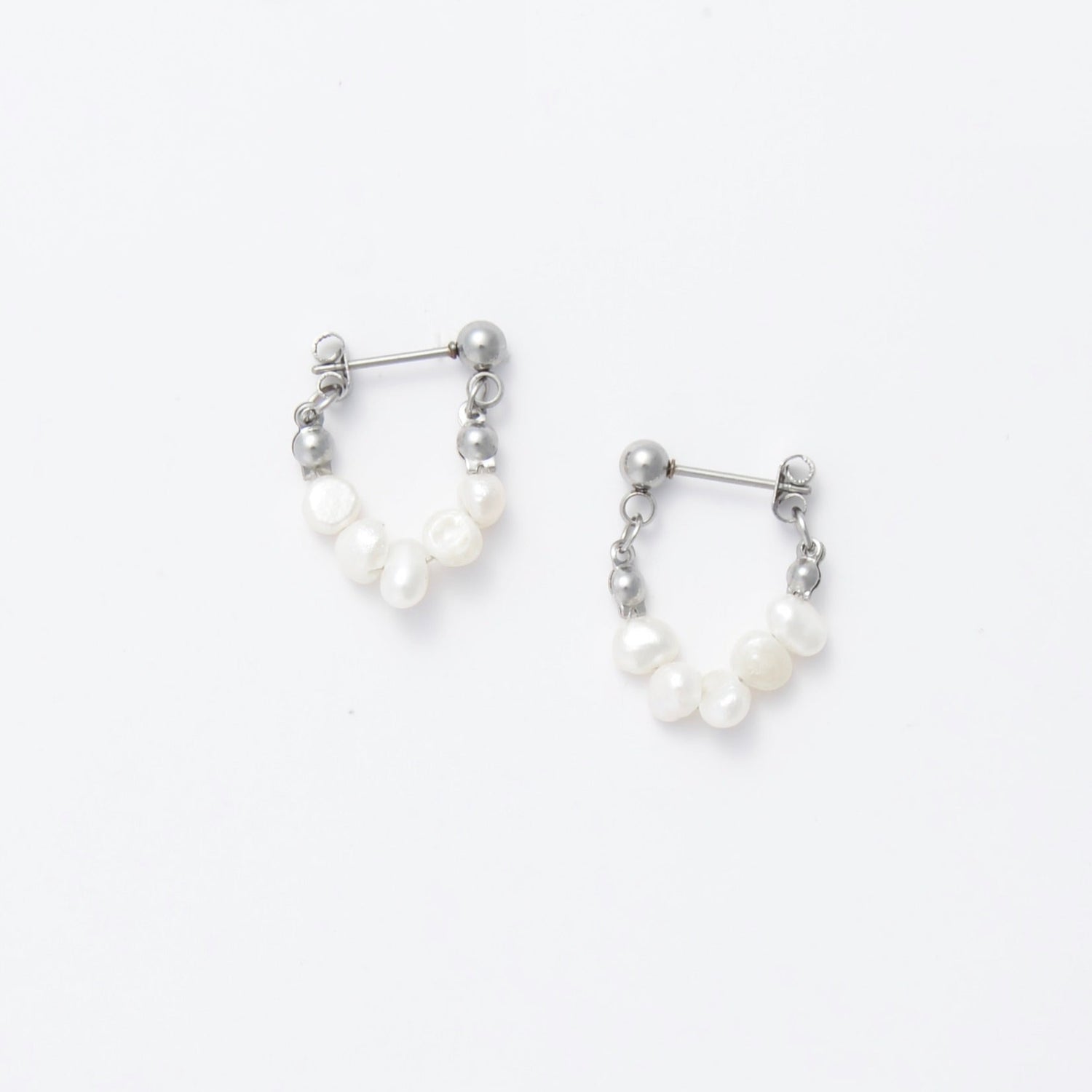
Why the Sculptural Ear Cuff Is the Jewelry of 2026
Share
She lifts her hair into a clip and notices, for the second time this week, that her ear is what the room sees first. Not the necklace, not the earring on the lobe, but the small architectural fact sitting high on the cartilage. Yesterday a stranger asked her where she got it, and the day before, a woman she works with said something quiet about it on the elevator. The cuff has stopped being an accessory and started being the first sentence she says when she walks into a room.
The sculptural ear cuff is the jewelry of 2026. This is not a fashion week thesis but an editorial reality that has been forming for two years across the SS26 runways, the editorial press, the resort collections, and the Met Gala carpet on May 4. The cuff has moved out of the trend column and into the structural column, which is to say it is the piece this year will remember itself by. A sculpted 925 sterling silver cuff at forty-five dollars makes the same architectural argument as a diamond cuff at five figures, because the shape does the work, not the metal. This post is about why the cuff matters, what kind of cuff is worth investing in, and what happens when 925 sterling silver does the same architectural work the diamond carpet did last night.
What a sculptural ear cuff actually is
A sculptural ear cuff is a shaped piece of metal that sits high on the cartilage of the ear, wrapping a curve rather than hanging from a piercing on the lobe. It treats the ear as architecture rather than as an anchor point. Most cuffs do not require a piercing, including the Glass Balloon Sculptural Wide Ear Cuff Mirrorweight, which slides on without one. The distinction between ear cuff and earring matters: an earring hangs from a fixed point, while a cuff makes the ear itself the structural site.
The word sculptural is doing real work in that phrase. Not every ear cuff qualifies, and the thin chain cuff with a small charm is not what the editorial conversation is talking about. The sculptural cuff is shaped, deliberate, weighted, reading as an object that was designed before it was decorated. It feels closer to a small architectural detail than to a piece of jewelry, where the shape comes first and the metal is what carries the shape.
This shift, from ornament to architecture, is the larger thing happening in jewelry right now. The piece is no longer being asked to decorate the body but to compose it, and the ear is the most legible place for that composition because the ear sits at the height of the face, in the line of sight, beside the jaw, near the hair. The ear cuff occupies that line of sight more decisively than a stud, more deliberately than a hoop, and more architecturally than a drop, which is what makes it the most visible piece of jewelry a woman can wear and also the most architectural.
The runways made the call before the carpet did
The sculptural ear cuff has been moving across luxury runways for the last three seasons. Ferragamo sent sculptural single earrings and cuffs that sat on the cartilage as architectural objects rather than as decoration. Givenchy under Sarah Burton's continuing direction has been doing the same. Brandon Maxwell's resort and SS26 looks layered cuffs and asymmetric earrings as part of the formal grammar of the collection. Across PORTER, Net-a-Porter, Marie Claire, and Vogue, the editorial direction has held steady for three seasons, with the cuff established as the piece, the asymmetric earring as its composition, and the ear as the structural site they both work on. Magazines do not agree on much, but they have agreed on this.
The Met Gala did not invent this trend. It confirmed one that had already been forming.
What the runway commits to and the editorial press confirms eventually trickles down, with a lag that usually runs six to twelve months from runway to mass cultural awareness. The Met Gala collapses that lag into a single image. Five sculptural ear cuffs on Rihanna's ear last night, photographed from forty angles, will move the cuff from "editorial trend" to "thing my friend just bought" inside two weeks. That is the function of the carpet, which is not where trends are born but where they become legible to the larger audience.
The carpet last night was the most public confirmation
At the 2026 Met Gala on May 4, three women wore the sculptural ear cuff in three distinct ways. Rihanna stacked five diamond cuffs on one ear, Anne Hathaway wore mismatched earrings with a single gold spike on one side and a diamond stud on the other, and Hailey Bieber wore softly hammered Belperron clips against a Saint Laurent gold breastplate. The carpet read the ear as architecture across all three looks, in three different temperatures of the same argument.
Rihanna wore three Briony Raymond diamond ear cuffs and two reverse pavé diamond cuffs from DYNE, the label by Sarah Ysabel Narici, layered up the curve of one ear with another architectural diamond earring climbing above. Five cuffs stacked on a single ear, and Vogue covered the look as the carpet's defining jewelry moment, which it was.
Anne Hathaway wore the gold Vimini spike paired with a Bulgari diamond spike necklace from the Magnifica collection. The asymmetry was deliberate, and the ear was being treated as composition rather than as a pair of matching anchors.
Hailey Bieber wore Belperron's Virgin Gold collection against a breastplate that referenced YSL's 1969 collaboration with Claude Lalanne. The press is calling her position sculptural restraint. She paid in five figures for those hammered ear clips in order to make the case that a piece earns its place by being shaped well, not by being loud.
Three positions on the same idea. Excess, asymmetry, restraint. The ear was the architectural site each of them used to make her case, with the neck doing supporting work, the wrist doing supporting work, and the ear holding the argument itself.
The case for silver
The same architecture that costs five figures in Belperron's Virgin Gold or six figures in Briony Raymond's diamond cuffs costs forty-five dollars in 925 sterling silver from Glass Balloon. The Tiffany Elsa Peretti ear cuff is the same 925 sterling silver at four hundred and seventy-five dollars. The shape is what the eye reads, not the carat weight or the designer pedigree.
The architecture is the same across all four pieces, and the price tier is what changes. The metal changes between the gold pieces and the silver pieces, but between the two silver pieces, the only thing that changes is the name on the box. Tiffany pays for the name and Glass Balloon does not, which is the argument worth understanding.
A sculpted silver cuff sitting on the cartilage of a real ear, in real light, makes the same architectural statement as a diamond cuff in the same place. The light catches differently and the economic argument is different, but the read in the room is identical. The eye does not stop at the cuff and ask what metal it is, the eye stops at the cuff and registers that the ear has been composed.
She is at the bathroom mirror getting ready for dinner, and the cuff is already on. She tries a hoop on the lobe of the same ear and takes it off, then tries a small silver stud and leaves it. The cuff does the architecture and the stud does the punctuation, which is enough. She does not put anything on the other ear, because the asymmetry is the point. She is making editorial decisions, on a Tuesday, in front of a mirror, in silver under fifty dollars per piece, while the carpet last night was making the same decisions in diamonds.
How to wear it now
To wear a sculptural ear cuff well, the simplest progression is one cuff sitting high on the cartilage with hair tucked behind the ear, paired with a small stud on the lobe of the same ear. The cuff is the architecture, the stud is the punctuation. Add a second cuff or hoop higher up if the piercings allow, or skip the second cuff and add asymmetry on the opposite ear instead, in a different shape and a different weight.
Start with one cuff. The Sculptural Wide Ear Cuff Mirrorweight is the place to start, because it fits most ear shapes without requiring a piercing, sits high on the cartilage where the architecture reads, and is shaped substantially enough to be the focal point of the look. Wear it with hair tucked behind the ear or twisted up. The cuff has to be visible to do its work, and hair covering it defeats the entire premise. The deeper guide on the Mirrorweight specifically lives in the Sculptural Ear Cuff post from late April.
Pair it with a small stud on the lobe of the same ear. The ear becomes a composed sentence rather than a single object, which is the editorial sentence the carpet was writing in diamonds last night and which works the same in silver tomorrow morning.
If the piercings allow it, add a second cuff or hoop higher up. If they do not, skip the second cuff and add asymmetry instead. A single small drop on the opposite ear, in a different shape and a different weight, is enough to make the mismatch read. Anne Hathaway wore the spike on one ear and the stud on the other in front of a thousand cameras last night, and the same composition reads at home, on a Tuesday, in 925 sterling.
Why this is not a passing trend
The sculptural ear cuff is a story spanning several years rather than a trend that fades in six weeks, because three things have committed to it: the SS26 runways across multiple seasons, the editorial press for the past eighteen months, and the cultural shift from ornament to architecture, which is generational rather than seasonal.
The runway commitment runs across several seasons. Ferragamo, Givenchy, and Brandon Maxwell have been sending sculptural earrings for at least a year, with fall and resort collections already confirmed. The cuff is now in the next two seasons of merchandise plans across luxury and mass market houses alike, which is what the trade press calls a structural commitment rather than a flash.
The editorial direction also spans several seasons. PORTER, Net-a-Porter, Vogue, and Marie Claire are not chasing the cuff because the carpet wore it, they have been positioning the cuff and the asymmetric earring as the defining jewelry shift of the late 2020s for the last eighteen months. The carpet last night was not the cause but the consequence.
The deeper story is the shift from ornament to architecture, which is generational rather than seasonal. The piece is being asked to compose the body rather than decorate it. That request comes from the same cultural place as the quiet luxury reorganization, the rise of sculptural restraint as an aesthetic position, and the editorial direction toward pieces that earn their place by being lived in rather than saved for occasions. The cuff fits cleanly inside that shift. It is a small piece of architecture you wear every day, not a decoration you pull out for special events.
This is why the cuff is worth investing in now rather than waiting to see if it sticks. It is going to stick. The runways have committed, the editorial press has committed, and the carpet has now confirmed all of it for the wider audience, leaving only the woman in front of her mirror to choose the cuff that is going to sit on her ear for the next several years.
What stays after the carpet
She is back at the elevator. It is the same one where the woman she works with said something quiet about her cuff a week ago, and the cuff is still there. It has been cared for the way silver is cared for, polished gently with a soft cloth, taken off only for sleep. By the end of this year, the woman who said something about it will have a cuff of her own, and by next year, half the women in the building will. The cuff will not feel like a trend by then. It will feel like the shape of the time.
The carpet last night gave the cuff its loudest year. The years after, when the diamonds have been put back in the safe, are when the silver does its work.