Pearl Jewelry in Summer: What Works and What Doesn't
Share
Pearl Jewelry in Summer: What Works and What Doesn't
She is standing at the edge of a rooftop somewhere in Brooklyn, a glass in one hand, the other resting on the railing. The sun has been on her skin for hours but she hasn't adjusted anything she put on that morning. The pearl necklace at her collarbone catches the last of the light. It looks like it was always supposed to be there, like it arrived before she did.
Pearls carry a reputation they did not earn. Somewhere in the cultural memory, pearls became the jewelry of restraint, of covered shoulders and quiet rooms. But that version of the pearl is not the one sitting against her bare clavicle at golden hour. The pearl that matters now is the one that moves between contexts without apology, from morning coffee to midnight somewhere in the West Village, surviving all of it.
This is what summer does to jewelry. It strips away pretense. It asks a simple question: Can you wear this when the temperature rises and the rules loosen? Pearls answer that question more honestly than most materials, if you know what to look for and what to leave alone.
The Material Truth About Pearls and Heat
Freshwater pearls are organic. They come from living mollusks, and they carry the properties of that origin. They are not as fragile as people assume, but they are not indifferent to their environment either.
Heat itself does not damage pearls. What damages them is the combination of chemicals and neglect. Sunscreen, perfume, chlorine, salt water, and prolonged direct sweat contact can dull the nacre over time if the pearl is never cleaned. The fear of wearing pearls in summer comes from conflating occasional exposure with chronic neglect.
A pearl necklace worn to a July dinner party and wiped down afterward will outlast one locked in a jewelry box for decades with no air circulation. Pearls need to be worn. The natural oils from skin actually help maintain their luster over time. This is one of the few materials that improves with contact rather than deteriorating from it. The pearl you wear to brunch every Saturday in August will look better than the one you saved for a wedding that never came.
The real risk is chemical, not thermal. Apply sunscreen and let it absorb before putting pearls on. Spray perfume on your wrists and let it dry before clasping a pearl beaded bracelet. The rule is simple: pearls go on last and come off first. Everything else is negotiable.
What Pearl Jewelry Works in Summer
The pieces that perform best between May and September share three traits. They sit close to the body without trapping heat. They move with the wearer rather than pulling or catching. And they look deliberate with bare skin, not like something left over from a different outfit.
Pearl beaded necklaces at collarbone length are the most forgiving summer piece. They sit in the zone between a choker and a pendant, which means they work with the necklines summer demands: scoop, V, off the shoulder, strapless. A strand of freshwater pearls at that length against sun-warmed skin is one of the strongest visual contrasts in all of jewelry. Cool against warm. Smooth against textured. You can find the full range in the pearl beaded necklaces collection, and every piece there is built for the kind of wearing that summer requires.
Pearl rings sit lower on the risk spectrum than necklaces because hands encounter more water, more friction, and more incidental contact with surfaces throughout the day. But a single pearl ring on an index or middle finger reads as intentional in a way that summer jewelry rarely does. It says she chose this. She did not just grab whatever was closest to the door. The pearl rings at Glass Balloon are set in 925 sterling silver, which means the band itself is hypoallergenic and holds up through heat, humidity, and the kind of careless living that good summers are made of.
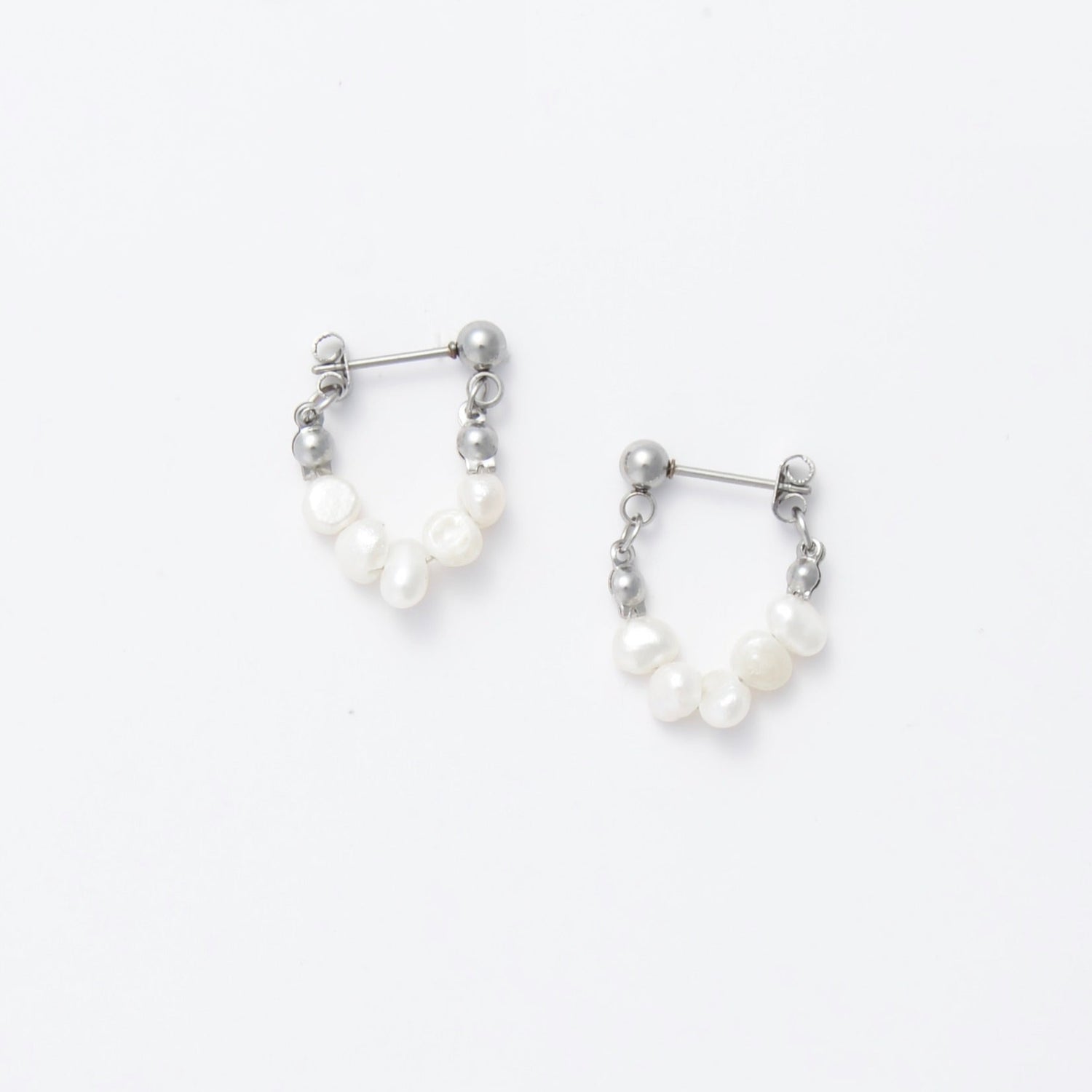
Drop earrings with a single pearl catch light and create movement near the face. In summer, when hair goes up or gets pulled back, earrings become the primary piece. A pair of pearl drop earrings does more work with a linen top and bare shoulders than a full layered stack does in December. Less competes for attention. The pearl just sits there, doing its job.
What Doesn't Work
Heavy multi-strand pearl necklaces feel wrong against bare summer skin, not because they are impractical but because they carry the weight of a different season. A triple strand of pearls with a sundress creates visual friction. The jewelry is speaking a different language than the outfit. Save it for October when the layers come back and the contrast works again.
Very long opera-length pearl strands that hang below the chest catch on things. They swing into food. They tangle with bag straps. Summer jewelry needs to stay out of the way and a 30-inch strand simply does not cooperate with the movement that warm weather demands.
Costume pearls with plastic cores overheat against skin and look obviously wrong in direct sunlight. Real freshwater pearls have a depth to their surface that synthetic ones cannot replicate, and summer light makes the difference unmistakable. If you are going to wear pearls when the sun is honest enough to reveal everything, the pearls need to be honest too.
The 2026 Pearl Shift
Something worth noting. The way pearls are styled in 2026 has changed from even two years ago. The classic uniform strand is no longer the default. This season, pearls are showing up mixed with silver chains, set in sculptural mounts, and layered with metal in ways that would have looked wrong in any other era.
The keyword is contrast. A freshwater pearl on a sterling silver chain reads differently from a pearl on silk thread. The metal gives it an edge. The pearl gives the metal warmth. This is the combination that is moving through fashion right now, from runway shows to the way women in Greenpoint are actually dressing on a Thursday evening.
For Glass Balloon, this is already built into the product. The 925 sterling silver collection pairs silver and pearl across multiple pieces, which means the layering that this moment calls for does not require assembling from five different brands. One collection, one material language, one consistent quality of silver against nacre.
If you are interested in layering pearls with silver chains specifically, the layered necklaces collection is the fastest path there. Start with a silver chain at one length and a pearl strand at another. The visual gap between them is what creates the depth.
How to Wear Pearls from June Through September
Morning to afternoon. One piece only. A pearl ring or a short pearl necklace. Nothing that competes with sunglasses and the kind of movement that errands require. The goal is a single point of polish against everything else being relaxed.
Afternoon to evening. This is where layering enters. Add a second piece. A pair of earrings over the necklace, or a bracelet alongside the ring. Two pieces from the same material family create repetition without redundancy, and that repetition is what makes an outfit look composed rather than assembled.
Evening only. Here, the rules dissolve. Pearl chokers with bare shoulders. Stacked pearl rings with a dark top. The necklace length guide can help you choose the right pearl necklace length for whatever your evening neckline demands. Summer evenings are the one context where pearls can carry real weight without looking overdressed, because the setting itself has shifted from casual to something with more intent.
Care That Takes Thirty Seconds
After wearing, wipe pearls with a soft cloth. Not a jewelry polishing cloth with chemicals on it, just a plain soft fabric. This removes the day's accumulation of oils, sunscreen residue, and salt before they have time to settle into the nacre.
If your pearls got genuinely dirty, perhaps from a beach day or a particularly humid afternoon, dampen the cloth with water and a single drop of mild soap. Wipe gently. Let them air dry flat, never hanging, because moisture pooling near the drill holes can weaken the silk thread over time. For a more complete walkthrough, the jewelry care guide covers sterling silver, pearls, and stainless steel maintenance in detail. The earlier piece on how to clean sterling silver at home also covers what to do when the silver settings around your pearls start to show wear.
Store pearls separately from other jewelry. A soft pouch, a cloth-lined section of a jewelry box, anything that prevents the pearl surface from being scratched by harder stones or metal edges. Pearls are a 2.5 on the Mohs hardness scale. Almost everything else in your collection is harder and will win the scratching contest.
The Pearl You Already Own
Somewhere in your jewelry rotation there is probably a pearl piece you stopped wearing because you were not sure when it was appropriate. The answer, for at least four months of the year, is now. Against warm skin, with a linen shirt, at the restaurant on the corner where you know the bartender. It is not formal. It is not trying. It is just a pearl doing what pearls do best: carrying light without competing for it.
The detail they remember long after you have left.