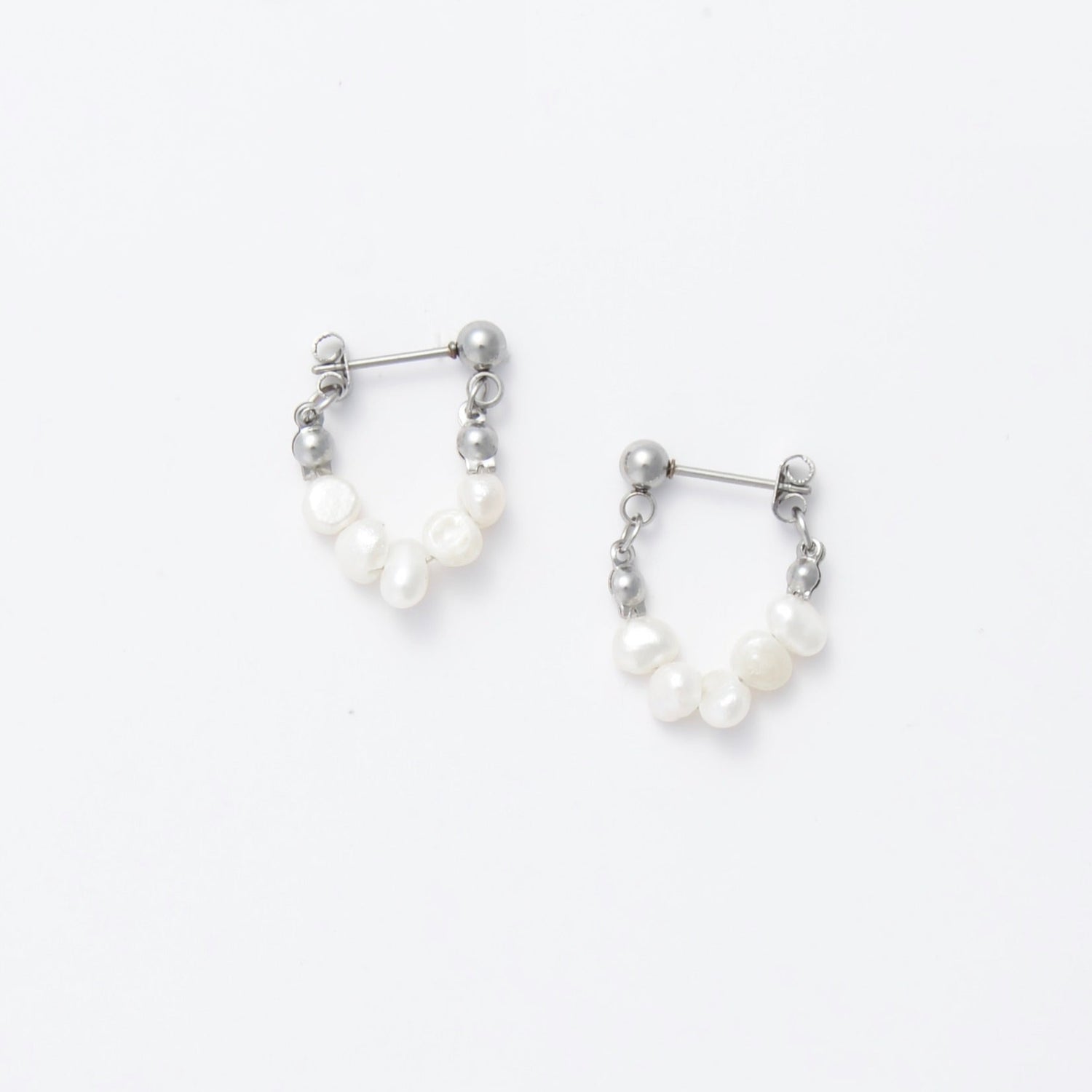
Jewelry and Skin Tone: Silver, Pearls, and the Undertone Myth
Share
The mirror isn’t neutral
There’s a moment, usually unplanned.
You catch your reflection in a window walking past. Late afternoon, the light turning everything softer than it deserves. Your necklace looks different than it did this morning. Cooler. Or warmer. Or just… right, in a way you didn’t expect.
We’re told jewelry should match our skin tone. That silver jewelry belongs to cool undertones. That gold jewelry belongs to warm ones. That pearl jewelry is somehow neutral, safe, predictable.
But the mirror isn’t neutral.
Neither is the light.
Neither are you.
This is where the rules start to slip.
The undertone myth, softly questioned
Warm or cool. Pink or yellow. Silver or gold.
The language is simple, which is why it stays. It gives structure to something that feels subjective. It offers a quick answer when you’re standing in front of a case, deciding.
But most people don’t exist cleanly inside those categories.
Your skin changes depending on the season, the city, the night before. It reacts to light, to color, to what you’re wearing. The idea that one metal will always “work” and another won’t starts to feel less like guidance and more like a limitation.
And quietly, it shapes how people choose.
Or more often, what they avoid.
Lighting changes everything
Try this without overthinking it.
Wear the same silver jewelry in three different places:
- Morning light, near a window
- Office lighting, slightly too bright
- Outside at night, under streetlights
It won’t look the same.
Silver jewelry sharpens in daylight. It reflects cool tones, sometimes pulling out pink or blue you didn’t notice before. At night, it softens. It blends. It becomes less about temperature and more about glow.
Pearl jewelry does something even stranger.
It absorbs everything. The sky. Your shirt. The warmth of your skin. The shadow at your collarbone. A freshwater pearl necklace in the morning can feel almost crisp. The same necklace at night can feel like it’s holding light instead of reflecting it.
This is why the rules break.
Because they assume the conditions stay still.
They don’t.
Contrast over category
A more useful question is not
“Is my skin warm or cool?”
It’s “What kind of contrast do I want?”
High contrast creates tension. It draws attention. Silver jewelry against warmer skin can feel intentional, a little sharper, slightly undone in the right way.
Low contrast feels quiet. A pearl necklace that melts into your skin tone. Minimalist jewelry that doesn’t interrupt, just lingers.
Neither is better.
They just say different things.
Modern jewelry is less about matching and more about placement. About how close something sits to your natural tone, or how far it pulls away.
Silver on warm skin, on purpose
There’s a hesitation people have with silver jewelry.
“I love it, but I don’t think it suits me.”
What they usually mean is:
it doesn’t blend.
And that’s exactly why it works.
Silver can cool down warmth in a way that feels deliberate. It can create a clean edge against softer tones. It can make everything feel slightly more modern, slightly more controlled.
Especially in everyday jewelry, where pieces are worn on repeat, silver becomes less about compatibility and more about identity.
You’re not matching.
You’re choosing a temperature.
Pearls aren’t neutral. They’re alive
Pearl jewelry gets labeled as neutral, but it’s one of the most reactive materials you can wear.
Baroque pearls shift with shadow.
Freshwater pearl necklaces pick up subtle color from skin and fabric.
Even minimalist pearl earrings carry a quiet luminosity that changes throughout the day.
They don’t sit on top of your skin.
They move with it.
A modern pearl necklace in soft daylight can feel almost matte. Under evening light, it becomes reflective, dimensional, slightly unpredictable.
This is why pearls belong in everyday jewelry now.
Not because they’re classic.
Because they refuse to stay the same.
Texture changes everything before color does
We talk about metal tone like it’s the main decision.
It’s not.
Texture does more.
A high polish silver chain necklace will read differently than a brushed or sculptural one. Smooth pearl jewelry feels softer, more blended. Irregular shapes create shadow, which adds contrast without changing color.
Sculptural earrings can feel bold even in soft tones.
Minimalist jewelry can disappear even in high contrast metals.
The eye reads shape before it reads temperature.
Your outfit is part of the equation
Jewelry doesn’t exist alone.
A white shirt will pull out coolness in silver jewelry.
Black will sharpen everything.
Cream and tonal dressing soften both silver and pearl jewelry into something quieter.
Layered necklaces behave differently depending on what sits underneath them. A delicate chain necklace over bare skin feels intimate. The same chain over fabric becomes graphic.
If undertone is a variable, clothing is the amplifier.
Your skin isn’t static either
There’s no fixed version of you.
You tan. You fade. You change products. You sleep differently. You move between cities, climates, routines.
Your skin shifts.
So the idea that your jewelry should stay within one fixed category starts to feel outdated.
What works in winter might feel off in summer.
What you wore last year might not feel like you anymore.
That’s not inconsistency.
That’s movement.
Why the rules still exist
The warm versus cool framework isn’t wrong.
It’s just incomplete.
For someone starting out, it gives a place to begin. It narrows choices. It makes shopping less overwhelming.
But it was never meant to be permanent.
It was meant to be a suggestion.
Not an identity.
Styling without permission
The shift happens quietly.
You stop asking if something suits you.
You start noticing how it feels.
You mix silver jewelry with pearl jewelry without thinking about undertones. You layer necklaces because the proportions feel right, not because the metals match. You wear the same piece during the day and at night and let it change with you.
This is where personal style actually begins.
Not in rules.
In repetition.
In choosing the same pieces again and again until they become part of how you move through the world.
A studio note from Glass Balloon
Every piece of Glass Balloon jewelry is tested outside the studio.
Morning light. Subway reflections. Late dinners. Quiet walks home.
Materials are chosen for how they behave across environments.
Not just how they look in perfect lighting.
Pearl jewelry is selected for its variation.
Silver jewelry is designed to hold both sharpness and softness.
The goal isn’t to match a skin tone.
It’s to move with it.
What actually matters
You’ll still catch your reflection sometimes.
In a window. In your phone. In a mirror that doesn’t feel entirely honest.
And something will look different. Not better. Not worse. Just different.
That’s the part to trust.
Jewelry was never meant to match you perfectly.
It was meant to shift with you.
And sometimes, the pieces that aren’t supposed to work
are the ones you don’t take off.