Getting Dressed in Under Three Minutes: The Jewelry Shortcut
Share
Getting Dressed in Under Three Minutes: The Jewelry Shortcut
She has nine minutes before she needs to leave. The outfit is done. Black top, good jeans, the shoes by the door. But the neckline looks bare and the whole thing feels like it is missing its last sentence. She opens the jewelry box, picks up three pieces without deliberation, puts them on in the order her hands know by memory, and walks out. The cab is already downstairs. She looks like she spent an hour.
She did not spend an hour. She spent eleven seconds on the jewelry and the rest on coffee. The difference between her and someone who actually spends an hour is not taste or money or a bigger collection. It is that she has already made the decisions. The choosing happened weeks ago. The morning is just execution.
This is the part most jewelry advice gets wrong. It treats every outfit as a new puzzle that requires a new solution. Choose pieces that match your neckline, your occasion, your color temperature, your hemline, your mood. By the time you have processed all those variables, you are late and wearing nothing. The real shortcut is not better decision-making in the moment. It is fewer decisions to make.
The Three Piece System
Every fast dresser runs a version of the same architecture, whether she knows it or not. Three pieces. One at the neck, one at the ear, one at the hand. Not because three is a magic number but because three creates enough visual repetition to look intentional without enough complexity to require thought.
The neck piece is the anchor. It sets the tone for everything else. A pendant necklace at mid-chest reads as polished casual. A choker reads as sharp. A layered set reads as someone who knows what she is doing. Choose one default. Wear it until it becomes reflexive.
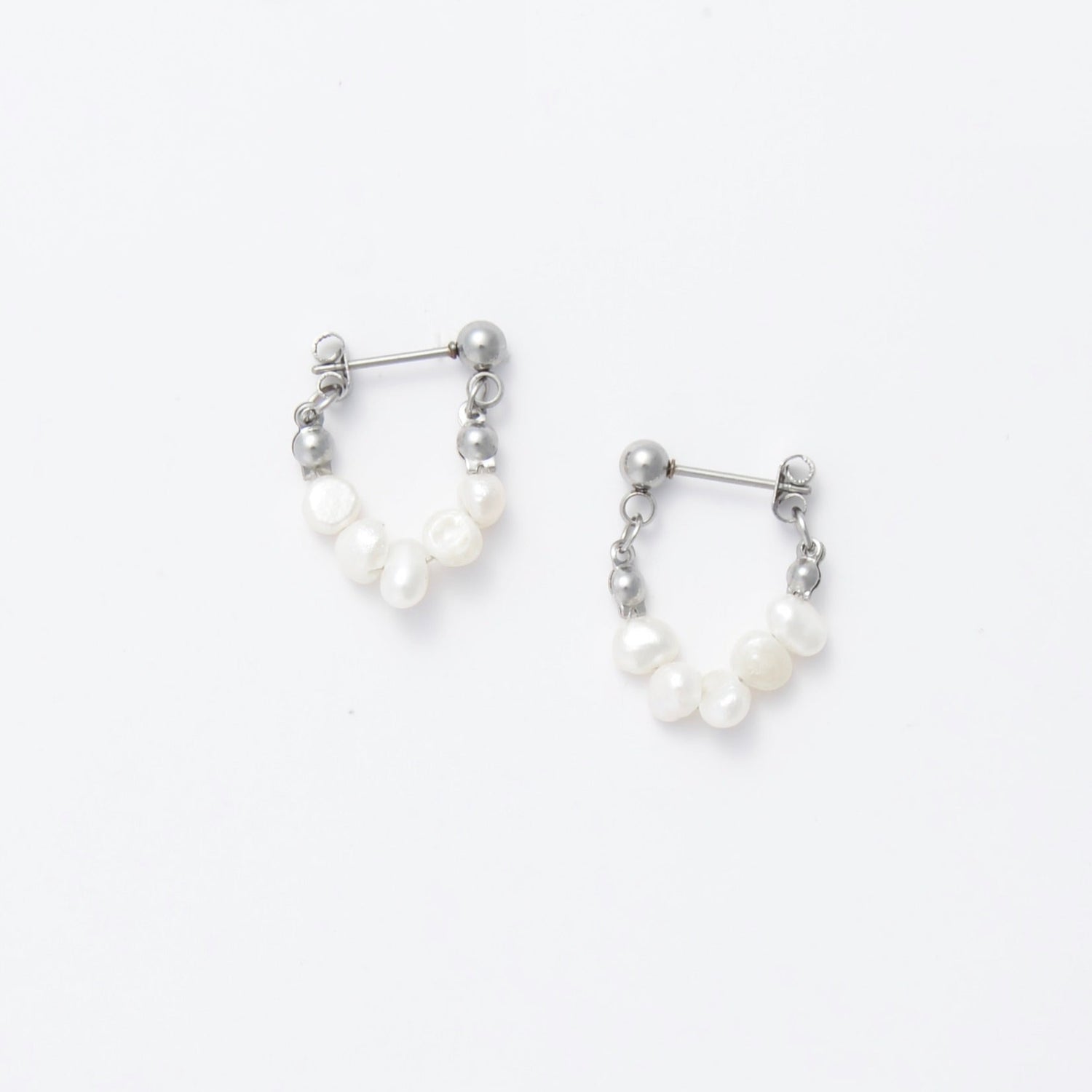
The ear piece provides balance. It catches light near the face, which is where other people look first. Small hoops or drops work for daily wear because they move with the head and do not compete with the necklace. The hoop earrings or drop earrings from the same metal as your neck piece create the repetition that pulls the outfit together.
The hand piece adds the detail that elevates the rest. A ring, a bracelet, or both if you already have your permanent pieces. The hand is the part of the body that moves the most throughout the day, which means the jewelry there creates micro-moments of visibility that the neck and ears cannot. When she reaches for a glass, when she gestures while talking, when she rests her chin on her hand. Each of those moments is a small flash of intention.
Building Your Default Stack
The fastest way to get dressed is to have one combination that works with eighty percent of what you own.
Start with your wardrobe, not your jewelry box. Look at the ten outfits you wear most often. Notice the necklines. Are they mostly crew neck, V-neck, scoop, or open collar? The answer determines your default necklace length. For crew necks, a necklace that sits just below the collar, around 16 to 18 inches, creates a clean layer of separation. For V-necks and open necklines, a longer pendant at 20 to 22 inches follows the angle of the neckline downward. The necklace lengths guide maps this in detail if you want to be precise about it.
Then choose one metal and stay there. Mixing metals is having a moment in 2026, and it can look excellent when done with purpose. But mixing metals requires thought, and thought is what we are trying to eliminate from the morning routine. If your default stack is all 925 sterling silver, you never have to check whether the ring matches the necklace. It always does. The 925 sterling silver collection exists specifically for this kind of use: a single material language across necklaces, earrings, rings, and bracelets so that any three pieces pulled from it will look coherent without effort.
The final step is to test the combination. Put on your three default pieces with three different outfits: one casual, one going out, one slightly dressed up. If the jewelry works across all three without adjustment, you have your daily stack. If it works for two out of three, you have a daily stack and one occasion that needs a swap. That is still only one decision instead of seven.
The Time Budget
Here is what eleven seconds of jewelry application actually looks like, broken down.
Earrings go on first because they require the most fine motor skill, and your hands are steadiest at the start. If you wear the same studs or small hoops daily and never remove them, this step takes zero seconds. Many women who dress quickly have solved earrings permanently. They found a pair, put them in, and stopped thinking about it.
Necklace goes on second. Clasping a necklace behind your neck takes between three and six seconds depending on the clasp design. If this regularly takes longer, the clasp is fighting you and the piece needs to be replaced or the clasp needs to be swapped. A lobster claw clasp in good condition should close on the first try.
Ring or bracelet goes on last because these are the fastest. Slide on, done. A bracelet clasp adds a few seconds but never more than the necklace.
The total for three pieces, assuming earrings are already in place, is under ten seconds. The total for three pieces including earrings is under twenty. Either number is faster than deciding what to wear, which is the step this system eliminates entirely.
What to Do When the Default Is Not Enough
Some days require deviation. A date, a dinner with people you want to impress, a work event where the dress code is slightly elevated. The three piece system still applies, but you swap one piece for something with more presence.
The highest impact single swap is the necklace. Replace your daily pendant with something that sits differently, a charm necklace with a pendant that catches conversation, or a shorter choker that changes the geometry of the neckline entirely. Everything else stays the same. One swap, one new look, no additional thinking required.
The second highest impact swap is earrings. Going from studs to drops changes the frame around the face, and that change is visible from across a room. It is the fastest way to signal that tonight is different from this afternoon without changing the outfit itself.
The lowest impact swap is the hand. Rings and bracelets are close-range details. They matter to the person sitting next to you at the bar, not to the person across the restaurant. Save the hand swap for when the occasion genuinely calls for it, or when the ring itself is interesting enough to carry a conversation.
Jewelry That Slows You Down
Certain pieces are incompatible with speed. They are not bad pieces. They simply do not belong in a morning routine.
Necklaces that tangle with each other in storage require detangling before wearing, which adds minutes. If you layer, store the layered set pre-clasped on a hook so it goes on as one unit. Better yet, buy a pre-layered necklace that eliminates the problem entirely.
Rings that are too tight or too loose require conscious awareness throughout the day. Too tight and you feel pressure. Too loose and you spin it, adjust it, worry about losing it. A ring that fits correctly vanishes. The ring sizer exists specifically to prevent this problem, and it takes two minutes to use.
Bracelets with complicated clasps that require two hands slow down both the putting on and taking off. A chain bracelet with a simple lobster clasp or a slide-on bangle eliminates this friction.
The general principle is that anything requiring concentration is not a daily piece. Concentration is what you save for work, for conversation, for the parts of life that actually reward your attention. Jewelry should not be one of them.
The Capsule Approach
If you want to take this further, build a jewelry capsule the way you would build a clothing capsule. The concept is the same: a small number of pieces that combine freely without creating bad outcomes.
A functional capsule for daily wear contains five to seven pieces. One necklace for crew necks. One for V-necks and open necklines. Two pairs of earrings (one small, one with more presence). Two rings. One bracelet. That is seven pieces, and from those seven pieces, you can assemble a slightly different three-piece combination for every day of the week without repeating.
The post on how to make jewelry look expensive touches on why this works: consistency of material and scale reads as collected rather than random, which is the difference between jewelry that looks expensive and jewelry that is expensive. A seven-piece capsule in sterling silver will outperform a thirty-piece collection in mixed metals and mixed quality every time.
For what it is worth, this is exactly how the jewelry archetype quiz was built. It identifies your natural tendency, whether you lean toward minimal, layered, statement, or structural, and from there, the capsule practically builds itself. Knowing your archetype means knowing your default, and knowing your default means never standing in front of the jewelry box wondering.
The Real Shortcut
Three minutes is generous. Most women who have internalized this system are dressed in under ninety seconds, jewelry included. They are not faster because they care less about how they look. They are faster because they front-loaded the decisions. They chose the pieces, tested the combinations, and committed to a default. The morning is just muscle memory.
The woman on the rooftop did not look effortless because she did not try. She looked that way because she tried once, weeks ago, standing in front of a mirror with six necklaces and a clear head and the willingness to commit. She found her three. She stopped looking.
That is the shortcut. It is not about spending less time on jewelry. It is about spending the time before the morning rather than during it.
##