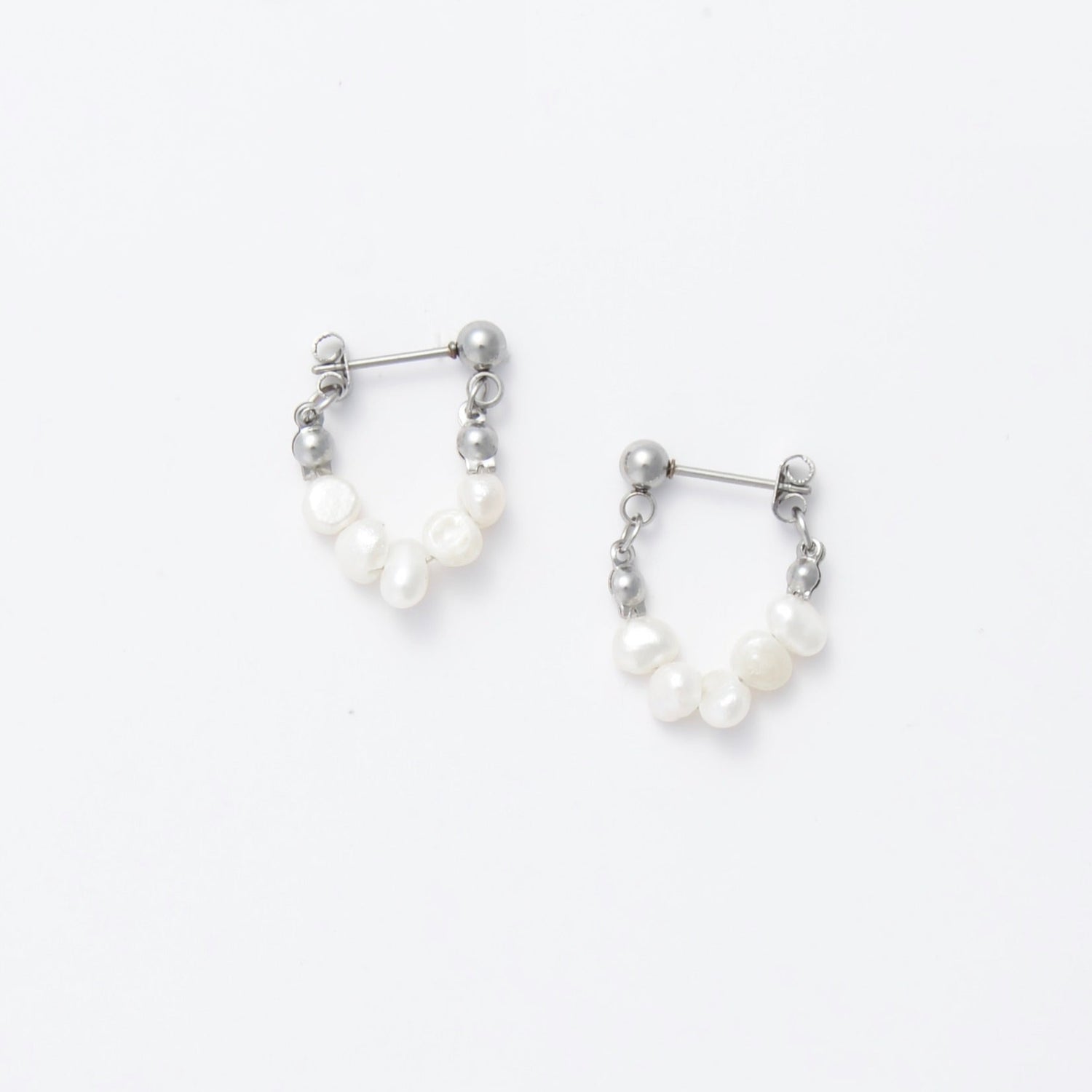
What My Cat Taught Me About Wearing Jewelry
Share
What My Cat Taught Me About Wearing Jewelry
I have learned more about wearing jewelry from a cat than from anyone who works in fashion. She did not mean to teach me, and she does not know she is teaching me, but she has been my afternoon companion for years now, watching me from the corner of the bed as I reach for the chain on the dresser, narrowing her eyes at the rings I have laid out as though she has an opinion about which one belongs on my hand today. The small things she does have rearranged my hand without my noticing, and I have come to think this is one of the truest things I can say about her, which is that she has changed how I wear what I wear.
Morning at the Dresser
She supervises the dressing. This is her main job in the apartment, as far as I can tell, and she takes it more seriously than most jobs I have held. She comes into the bedroom at six forty-five, settles herself on the duvet in the patch where the sun has just landed, and watches me lift the small dish off the dresser where the rings live. I have not asked for her advice. She is offering it anyway, through the way her tail moves slowly when I pick up something she approves of and faster when I have made a mistake she will not name.
What I have learned, watching her watch me, is that choosing jewelry in the morning is a smaller decision than the rest of the world treats it as. The world treats it as a styling exercise. The cat treats it as the moment you decide which version of yourself is going to walk out the door, which is closer to the truth of what is happening. She does not care if the ring matches the sweater. She cares whether I have considered the choice or defaulted into it, and the difference between consideration and default is the difference between a hand that belongs to its owner and one that has been handed its owner by accident.
The Slow Blink
When I have settled on the chain and the ring, she does the slow blink. Both eyes close together with the lazy deliberation of a queen acknowledging a small but acceptable tribute, and then open again. The slow blink in cats is a form of trust display, but I think it is also a form of approval. She is telling me the choice will do.
Good jewelry asks for the same kind of slow attention the slow blink offers. It does not flash, does not signal, does not demand to be looked at. It sits low against the collarbone or close on the finger, and it waits to be noticed second, which is the position from which all the best things in a room operate. The chain from the 925 Sterling Silver Collection that does this work most reliably is the Silver Dainty Chain, which is built to be the piece that gets noticed second and never first, which is exactly what the cat has been teaching me to be on the days I am paying enough attention to learn.
The Zoom
Around nine she remembers she is a small predator and does the thing where her ears flatten sideways and she launches herself off the bed into the hallway, where there is nothing to hunt but her own reflection in the floor, which she takes very seriously. The undignified comedy of this lasts about twelve seconds. Then she is back on the bed, eyes wide, pretending the whole episode was something I imagined and she had nothing to do with.
This is the lesson about the surprising piece. Every working set of jewelry needs one item that breaks the rest of the rhythm, and not a statement necklace, which is a different category entirely, but the small unexpected thing that turns the look from a uniform into a sentence with a comma in it. The pearl tucked into a stack of silver chains. The pendant that does not belong on the chain you have hung it from but does. The two metals everyone tells you not to mix. The piece that catches the eye precisely because it should not be there, the way the cat launches herself off the bed precisely when nothing has provoked her, for the sole purpose of reminding you that the day is alive and was not going to remind itself.
The Eleven O'Clock Visit
At eleven she comes into the workroom. She knows it is eleven the way she knows everything, which is by some internal compass that does not care what the clock on the wall says. She walks in, looks at me with the expression of someone who has been considering the matter for a while and has now decided to bring it up, and waits.
What she is teaching me here is the value of the interruption. The thing that breaks the rhythm of the workday is not always the enemy of the workday. Sometimes it is the part that keeps the rest of the day from collapsing in on itself. The chain that catches on a sweater collar and reminds you it is there. The ring that turns slightly on the finger when you reach for the coffee mug and brings you back into your own body for half a second. These are not flaws in the jewelry but features of the jewelry, the way the cat at the door at eleven is not an interruption but a reminder that I am still a person in a room, which I evidently need every three hours, and the small movement of the chain at my collarbone when I turn to look at her is the smaller version of the same correction.
Afternoon Light
By two o'clock she has migrated to the windowsill. The afternoon light comes through the glass and catches her eyes, which are the green of a particular kind of old bottle, flat and curved at once, holding the light without seeming to take any of it in. Her eyes are like marbles, I have decided, in the original sense of the word, which is small round things made of mineral that hold a small amount of color inside them and return it when looked at.
This is what jewelry is made to do, when it is made well. To hold light without taking it in. To catch a room and return it slightly changed. A pearl does this, which is why pearls have always felt to me like a small piece of the cat I am borrowing for the day. A piece of polished silver does this, especially when it has been worn long enough to soften at the edges and the patina has come up. The eye of the cat and the surface of a good piece of silver are doing the same quiet work, sitting still while the room moves around them and looking back as though they have an opinion they are choosing not to share.
The Cat in the Chair
By five she has moved to the chair by the door, the one we tested in the store by shaking it hard enough that the salesperson took a small step back, the one I picked over a prettier chair because the prettier chair would have wobbled. She is curled against the arm of it now, paws tucked, the small dignified loaf she becomes when she is settling in for the evening. She does not know we chose this chair for her. She does not know that the lamp she walks under, and the side table she will not jump on because it is exactly the wrong height, and the spot on the rug where the candle is not, are all small acts of architectural devotion the apartment is built out of. She is the secret organizing principle of the room, which she has no way of knowing.
The jewelry on my body works the same way. The chain at the collarbone is there because I tested it for years against every morning and it survived. The ring on the third finger is there because it has not slipped in two summers. The small charm at the base of the chain is there because I stopped saving it for special occasions and let it become part of the architecture of my body the way the chair is part of the architecture of the room. The pieces I wear are the version of the apartment I take with me, and the version of the cat I take with me, and the version of all the small careful decisions I have made about which things deserve to be in the room at all.
It is six o'clock now. She has not moved. The light in the chair has shifted twice without her noticing, or with her noticing and not caring. The chain at my collarbone is where it always is. The ring on my third finger is where it always is. The small dish on the dresser is empty, because the things from it are on me, and the cat in the chair is asleep, and the apartment is doing the quiet work of being the apartment we have built around her, and around the things we have decided to wear, and around the small reliable shape of an afternoon in which nothing has gone wrong and a small creature has taught me, again, how to live in it.
She has been my teacher for years, and she does not know this, and I have never told her. The pieces I wear are the report cards.